Budget a moderate amount for a basic basement home theatre build in Calgary, a higher amount for a mid-range room, and significantly more for a premium install with custom acoustic treatments and cabinetry. Those figures cover construction only; AV equipment, seating, and decor are separate line items. Before you commit to a number, confirm your permit requirements with the City of Calgary and get a contractor on-site to measure your actual space.
TL;DR:
- Electrical and low-voltage wiring in Calgary home theatres can cost between $1,500 and $5,000, depending on the number of runs and distance from the panel.
- Most construction costs for a basement theatre range from $2,500 to $8,000 for framing, insulation, drywall, and flooring, with higher expenses for acoustic treatments and custom features.
- Permit review usually takes two to four weeks, with additional time needed for rough-in, inspections, finishes, and potential asbestos testing in homes built before 1990.
- Moisture management is crucial, as trapping moisture behind acoustic materials in Calgary’s climate can cause mold and warping, requiring proper vapour barriers and ventilation.
- Choosing a local, experienced contractor who provides transparent pricing, handles permits, and offers reliable post-installation support reduces unexpected costs and project delays.
Table of Contents
- How much does electrical and AV wiring cost separately from equipment?
- What do the major trade costs look like line by line?
- How long does a basement theatre project actually take?
- Why does moisture management matter so much in a basement theatre?
- What should you look for when hiring a basement theatre contractor?
- What hidden costs catch Calgary homeowners off guard?
- What warranty and support should you expect after installation?
- The trade-offs conventional advice skips over
- How do you get a Statera estimate and what does it cover?
- Key Calgary resources for permits and planning
- Sources
How much does electrical and AV wiring cost separately from equipment?
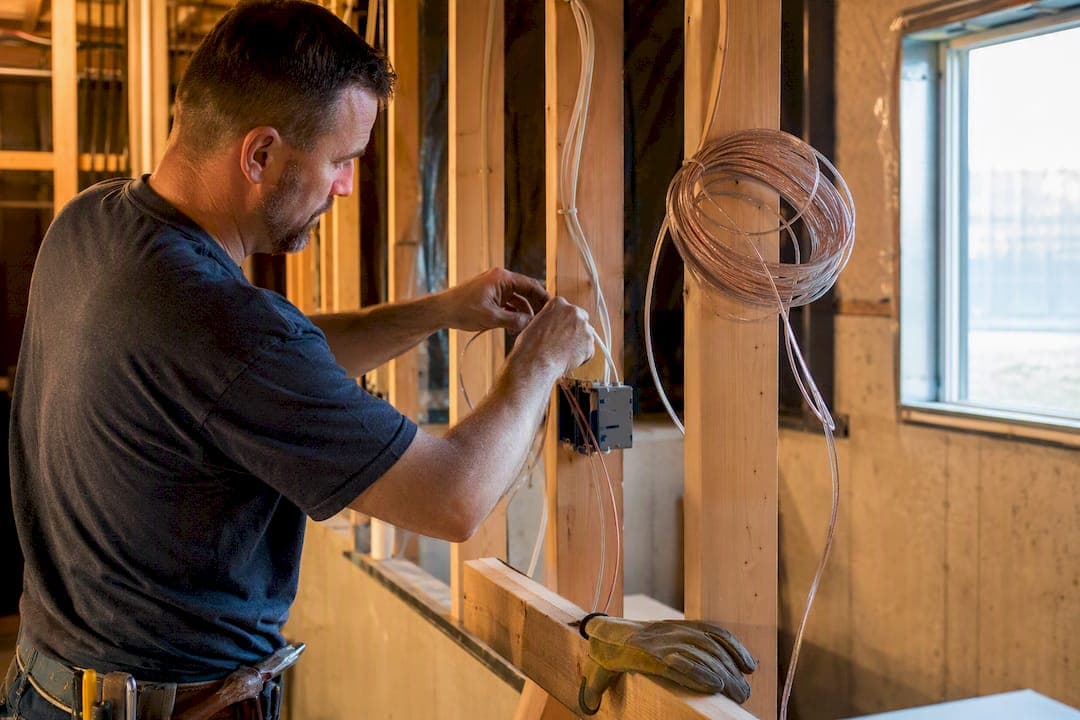
Homeowners often lump wiring in with speakers and projectors, then get surprised when the electrical quote lands on its own. In Calgary, dedicated electrical and low-voltage cabling for a home theatre room typically runs $1,500 to $5,000, depending on how many runs you need and how far they travel from the panel.
That range covers speaker wire, HDMI runs, ethernet drops for streaming boxes, and dedicated circuits for amplifiers and projectors. A single dedicated 20-amp circuit costs several hundred dollars installed, and most theatre rooms need at least two or three circuits.
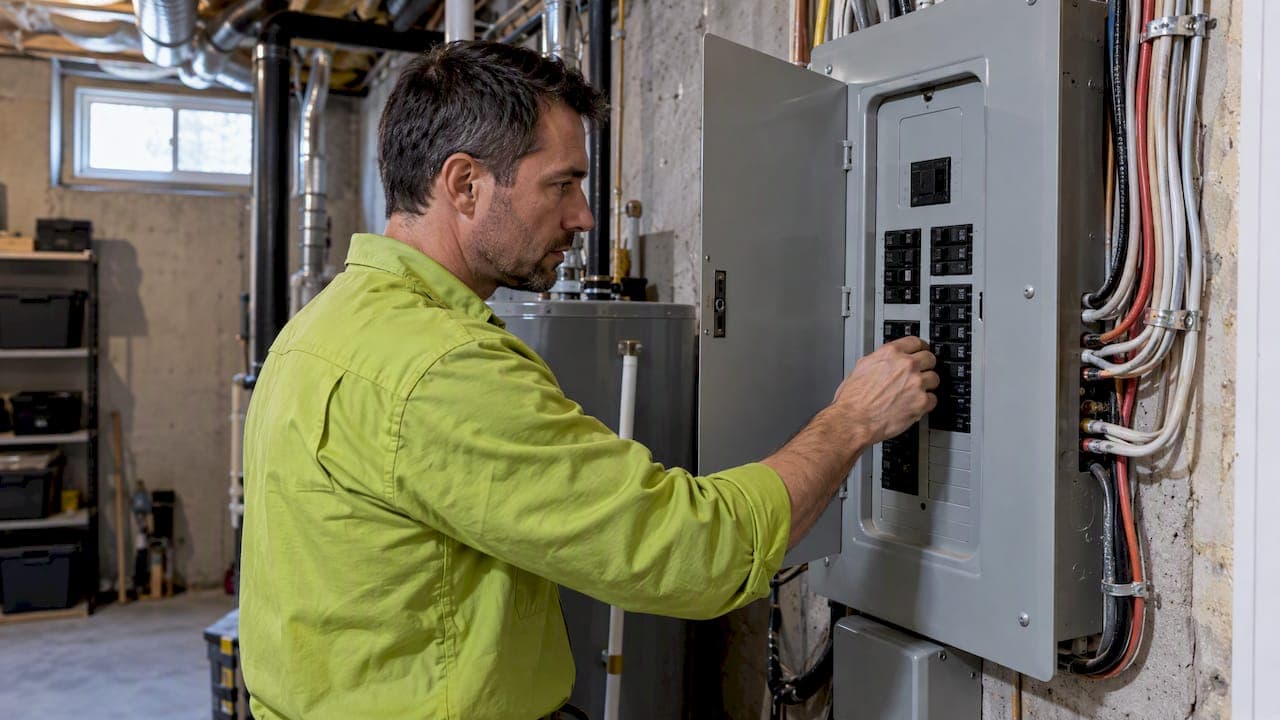
If your electrical panel is already near capacity, a panel upgrade can add significant cost to the job. Older Calgary homes with 100-amp service are the usual culprits here, and it’s a cost worth flagging early rather than discovering mid-renovation.
Here’s the real savings lever: running speaker wire and HDMI conduit during the framing and rough-in stage, before drywall goes up, cuts per-run labour costs significantly compared with fishing wire through finished walls later. Decide on your speaker layout and equipment rack location before framing starts, not after.
Pro Tip: Ask your electrician to install one or two extra conduit runs “for future use” during rough-in. It costs almost nothing at that stage and saves you from cutting into drywall two years from now when you upgrade your sound system.
What do the major trade costs look like line by line?
Framing, insulation, drywall, and flooring make up the bulk of a basement theatre’s construction cost, and each trade has its own budget range depending on scope.
- Framing: $2,500 to $6,000 for new stud walls dividing the theatre from the rest of the basement, including a bulkhead if you’re dropping the ceiling for wiring or ductwork.
- Insulation: $1,500 to $4,000, factoring in both thermal insulation against foundation walls and acoustic batt insulation inside interior partitions to dampen sound transfer.
- Drywall: $2,000 to $5,000, with premium jobs often using resilient channel or double-layer drywall for extra sound isolation between the theatre and adjacent rooms.
- Flooring: $2,000 to $8,000 depending on material; carpet tends to run cheaper and absorbs sound better, while luxury vinyl plank costs more but handles basement moisture better.
- Acoustic treatments: $1,500 to $10,000+, covering foam panels, fabric wall coverings, or built-in acoustic paneling depending on how serious you are about sound quality.
- HVAC and ventilation: $1,500 to $4,000 to extend or rebalance ductwork so a sealed theatre room doesn’t turn into the warmest or coldest room in the house.
Costs stack up fast once you factor in a dropped ceiling, custom millwork for equipment racks, or a raised platform for tiered seating. A mid-range theatre almost always includes at least one of these upgrades.
How long does a basement theatre project actually take?
Most basement home theatre projects in Calgary typically take a few months from permit application to final install, with the permit stage often the most variable in duration.
Permit review through the City of Calgary typically takes two to four weeks once your application and drawings are submitted, assuming your project involves structural changes, new electrical circuits, or plumbing work, which most theatre builds do. The city’s ePermit checklist requires dimensioned floor plans, window locations for egress compliance, and smoke and carbon monoxide detector placements before your application moves forward.
Rough-in, covering framing, electrical, plumbing if applicable, and HVAC adjustments, usually takes a few weeks. Inspections happen at this stage before drywall closes anything up, so factor in a few days of scheduling buffer for the city inspector.
Finishes, including drywall, paint, flooring, and acoustic treatments, generally take several weeks depending on complexity. AV installation, including final connections, calibration, and mounting equipment, usually adds about a week or two at the end.
Homes built before 1990 face an extra wrinkle: asbestos testing is often required during permitting, and if abatement is needed, it can add days or weeks before demolition even starts. Build that contingency into your timeline if your house predates 1990.
Why does moisture management matter so much in a basement theatre?
Basements make excellent theatre rooms because they’re naturally darker and easier to soundproof against exterior noise. That same underground location is exactly why moisture control has to come before acoustics on your priority list.
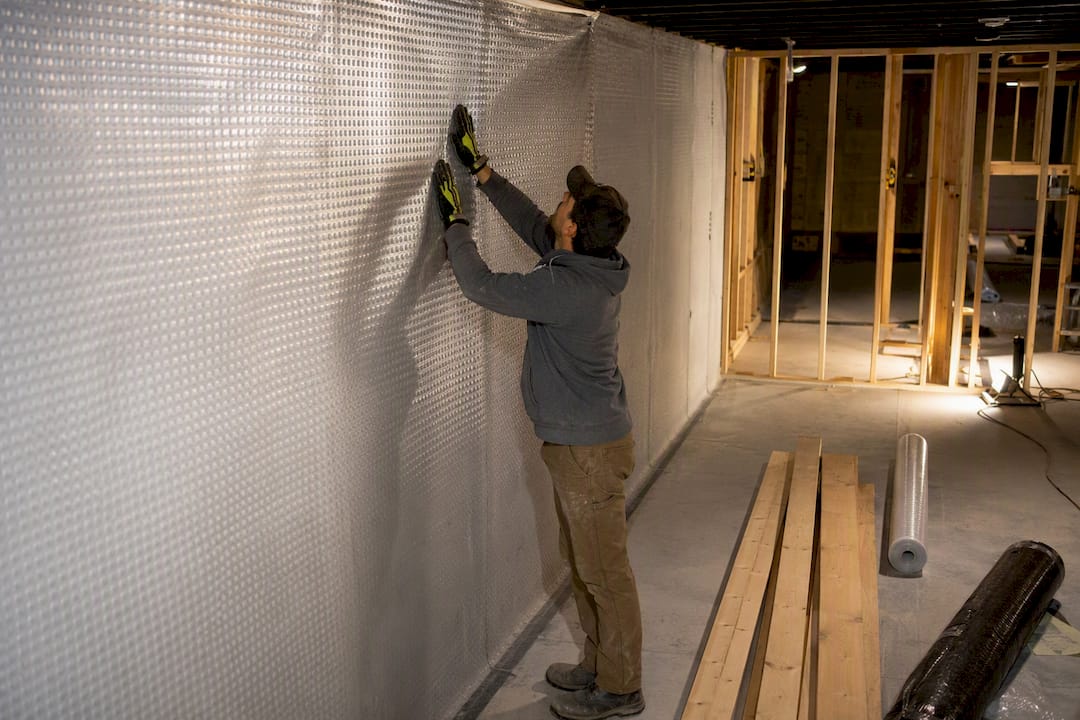
Calgary’s basements deal with seasonal moisture swings, from spring runoff pressure against foundation walls to winter condensation where warm indoor air meets cold concrete. A theatre room sealed tight for sound isolation traps that moisture if it isn’t managed correctly, which leads to mould behind acoustic panels or warped flooring within a year or two.
Breathable wall assemblies and proper vapour barrier placement reduce long-term maintenance costs compared with fully impermeable finishes that trap moisture against concrete. This matters more in a theatre than a typical basement rec room because acoustic insulation and fabric wall coverings hold moisture longer than bare drywall would.
Local AV professionals consistently advise treating the room’s architecture and moisture control as the foundation of the project, well before selecting speakers or a projector. A theatre with a mediocre sound system in a dry, well-ventilated room outperforms a premium system fighting condensation and material breakdown. Ask your contractor specifically how they’re addressing sub-slab moisture, wall vapour barriers, and dehumidification before you sign off on any acoustic finish package.
What should you look for when hiring a basement theatre contractor?
Pricing transparency is the first filter. A qualified contractor gives you a line-item breakdown covering framing, electrical, insulation, drywall, flooring, and permit fees separately, not a single lump number with no explanation of what’s included.
Ask to see their City of Calgary permit history or at least confirm they handle permit applications directly rather than leaving that paperwork to you. A contractor who’s pulled basement permits before knows the ePermit checklist requirements cold and won’t lose weeks to a rejected application over missing egress window details or detector placement drawings.
Local experience matters more in basement work than almost any other renovation category, because Calgary’s soil conditions, foundation types, and climate swings behave differently than basements in other cities. A contractor who’s finished dozens of Calgary basements has already seen what happens when moisture control gets skipped or when an older home’s electrical panel can’t handle a new theatre circuit.
Ask three direct questions during your consultation: How do you handle permit applications and fees? What’s your allowance structure for AV wiring if I haven’t finalized my equipment list yet? How do you handle contingencies if we find something unexpected, like an undersized panel or old asbestos insulation, once demolition starts?
Statera Contracting approaches basement renovations with licensed, insured local project experience, which is worth confirming with any contractor you’re considering, since Alberta doesn’t require basement renovators to carry a specific licence class the way electricians or plumbers do.
What hidden costs catch Calgary homeowners off guard?
Permit fees themselves are modest but easy to forget when you’re focused on trade costs. A building permit for a new basement runs $333.84, a renovation to an existing developed basement runs $205.92, and a homeowner electrical permit adds $116.50. Budget for these separately from your construction quote.
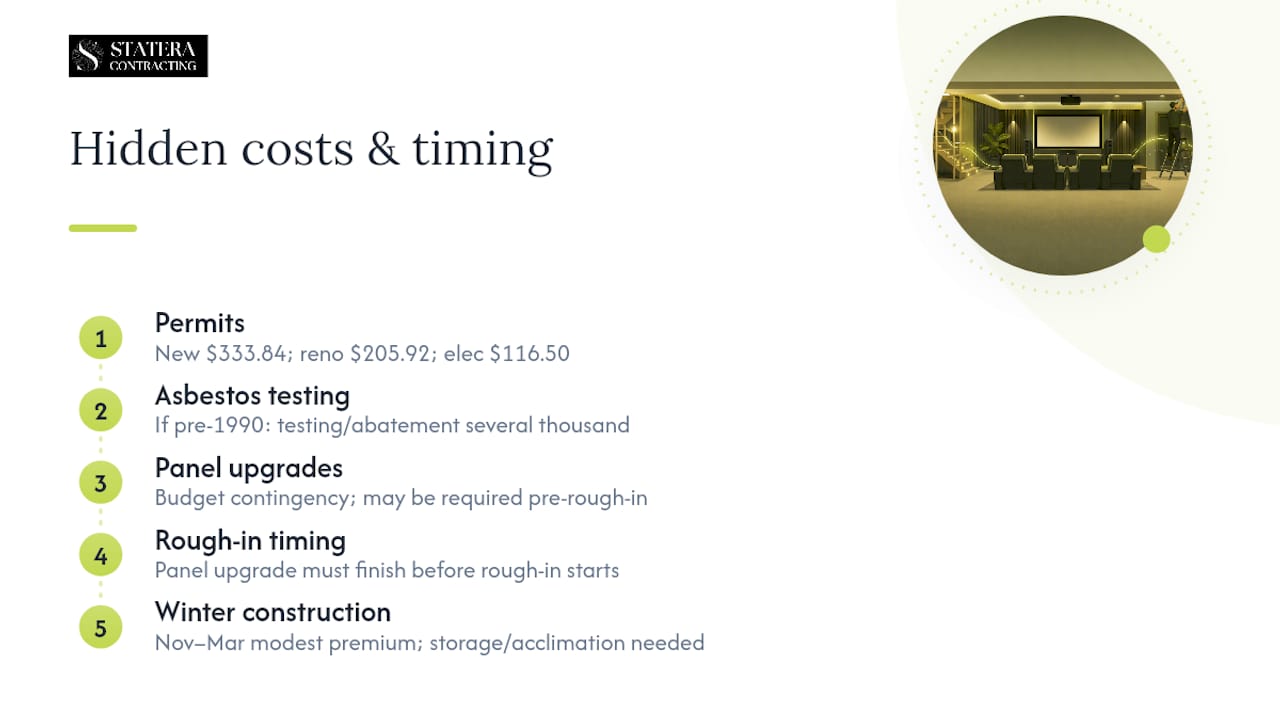
Asbestos testing is the bigger wildcard for older properties. If your home was built before 1990, testing and possible abatement can add several thousand dollars and push your timeline back, particularly if abatement crews need to be scheduled before demolition can proceed.
Electrical panel upgrades are the other common surprise. Many Calgary homes from the 1970s and 1980s still run 100-amp service, and adding a theatre’s dedicated circuits can push a panel past capacity. Budgeting a contingency for a panel upgrade before rough-in starts avoids a mid-project change order that derails your budget and schedule.
Winter construction adds its own wrinkle. Materials delivered during a Calgary cold snap need proper storage and acclimation before installation, particularly flooring, and some trades charge a modest premium for winter scheduling. It’s not a dealbreaker, but it’s worth asking your contractor how they handle it if your project falls between November and March.
What warranty and support should you expect after installation?
A reputable Calgary contractor backs structural and trade work with a workmanship warranty, typically covering one to two years on framing, drywall, and finishing work, separate from manufacturer warranties on any AV equipment you purchase independently.
Ask specifically how warranty claims get handled. Does the contractor return to fix issues themselves, or do they coordinate with the original tradespeople? A theatre room combines electrical, HVAC, drywall, and acoustic work under one roof, so a fragmented warranty system where you’re chasing down four different subcontractors for a single ceiling crack is a red flag.
Post-installation support matters more for theatre rooms than most renovations because they involve more moving parts than a typical basement rec room. Ask whether your contractor offers a follow-up visit a few months after completion to check for drywall settling, moisture issues behind acoustic panels, or HVAC balance problems that only show up once the room’s been in regular use through a full season.
A contractor with genuine local project experience, rather than a general renovator who occasionally takes on a theatre job, tends to have already refined this follow-up process because they’ve seen what goes wrong in Calgary basements specifically.
The trade-offs conventional advice skips over
Most cost guides treat a basement theatre like a bigger version of a rec room with better speakers. That’s the wrong frame. The room itself, not the equipment inside it, determines whether the project succeeds, and that’s where conventional advice tends to underinvest.
Homeowners routinely spend $8,000 on a projector and sound system while skimping on the wall assembly and moisture barrier behind it. Within two years, that acoustic fabric wall is holding condensation, and the “premium” theatre needs remediation work that costs more than the audio upgrade it was supposed to complement. The construction-first approach isn’t conservative advice, it’s the only sequence that actually protects the investment.
The other thing conventional advice underestimates is how much running conduit during framing saves versus retrofitting. It’s not a minor efficiency, it’s often the difference between a $2,000 wiring job and a $6,000 one once drywall is already up. If you take one thing from this article, decide your equipment layout before framing starts, not after.
Calgary’s climate and soil conditions aren’t generic renovation variables. They’re the reason a theatre built here needs a different moisture strategy than one in a drier climate, and that’s a detail worth pressing any contractor on before signing a contract.
— Patrick
How do you get a Statera estimate and what does it cover?
Statera Contracting is the direct route to a fixed-price basement theatre build in Calgary, without the guesswork of piecing together separate quotes from an electrician, a framer, and a flooring contractor on your own. One on-site visit gets you a full picture instead of three partial ones.

A Statera on-site estimate covers permit review against the City of Calgary’s current requirements, an asbestos check if your home predates 1990, and a full trade scope broken out by phase, framing, electrical, insulation, drywall, flooring, and acoustic finishing, so you know exactly what you’re paying for before work starts. When you’re interviewing any contractor, ask how they handle permit filing, what allowance they build in for AV wiring if your equipment list isn’t finalized yet, and how they manage contingencies like an undersized electrical panel or unexpected moisture behind an old wall.
Statera Contracting serves Calgary and nearby communities including Okotoks, Cochrane, and Airdrie. Visit the basement and living spaces page to book a site visit and get a written estimate for your project.
Key Calgary resources for permits and planning
- City of Calgary basement and renovation permit guidance
- ePermit checklist for home renovations and basements
- Statera Contracting’s basement finishing guide
- Basement renovation cost breakdown for another Canadian market for comparison on labour and material splits
Sources
- Home renovations and basements — City of Calgary
- Residential ePermit home renovations & basements checklist — City of Calgary
- How much does it cost to wire a Calgary home theatre room? | Calgary Electrical Services
Recommended
- Basement renovation cost in Calgary: realistic budgets | Statera Contracting
- Basement & Living Spaces Calgary | Legal Suites & Finishing | Statera | Statera Contracting
- Basement Finishing Calgary: Full 2026 Guide | Statera | Statera Contracting
- Bathroom Renovation Calgary 2026 Cost Guide | Statera | Statera Contracting