Bathroom remodeling for seniors is the process of adapting a bathroom to meet the safety, accessibility, and comfort needs of aging bodies and changing mobility. The bathroom is the most dangerous room in the home for older adults. Approximately 235,000 Americans over age 65 visit emergency rooms each year due to bathroom falls and injuries. That number makes a strong case for acting before an accident happens. The good news is that a well-planned accessible bathroom renovation, guided by ADA standards and aging-in-place design principles, can extend independent living by years while adding real value to your home.
1. What are the top safety features for a senior bathroom remodel?
The highest-impact upgrades in any seniors bathroom remodel address the three main fall risks: slippery surfaces, unstable entry and exit points, and poor lighting. Getting these right first gives you the best return per dollar spent.
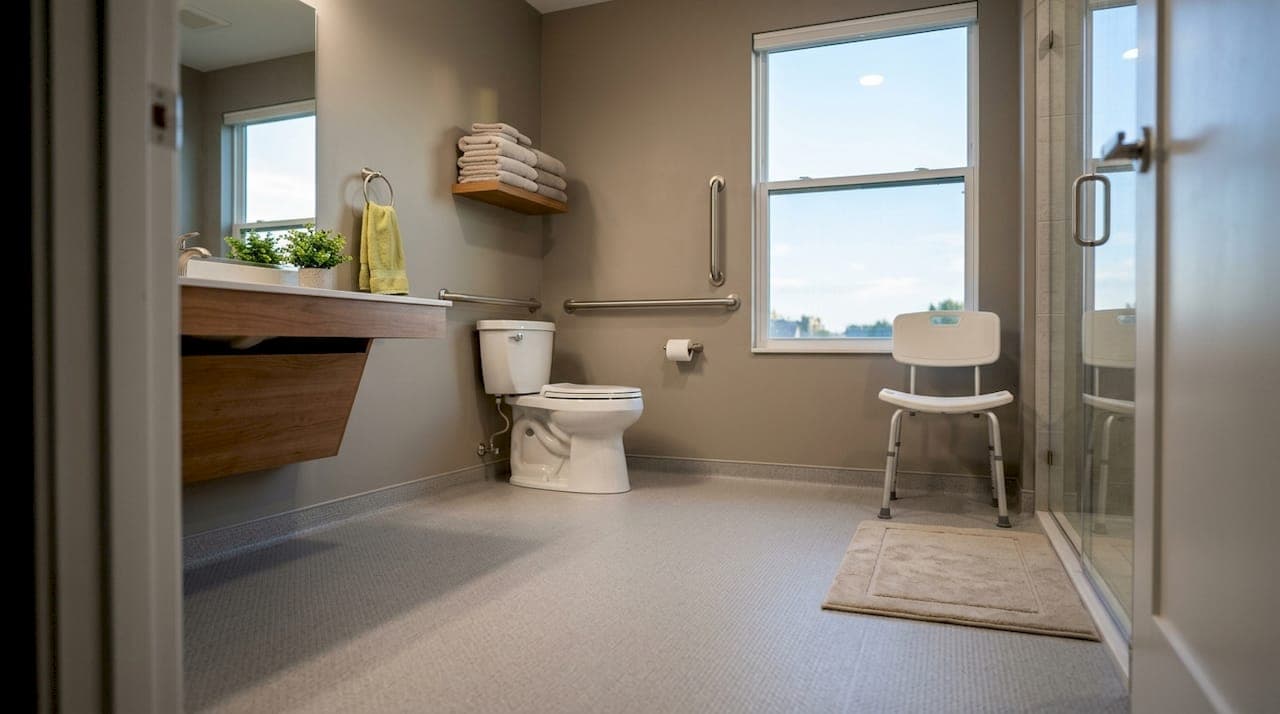
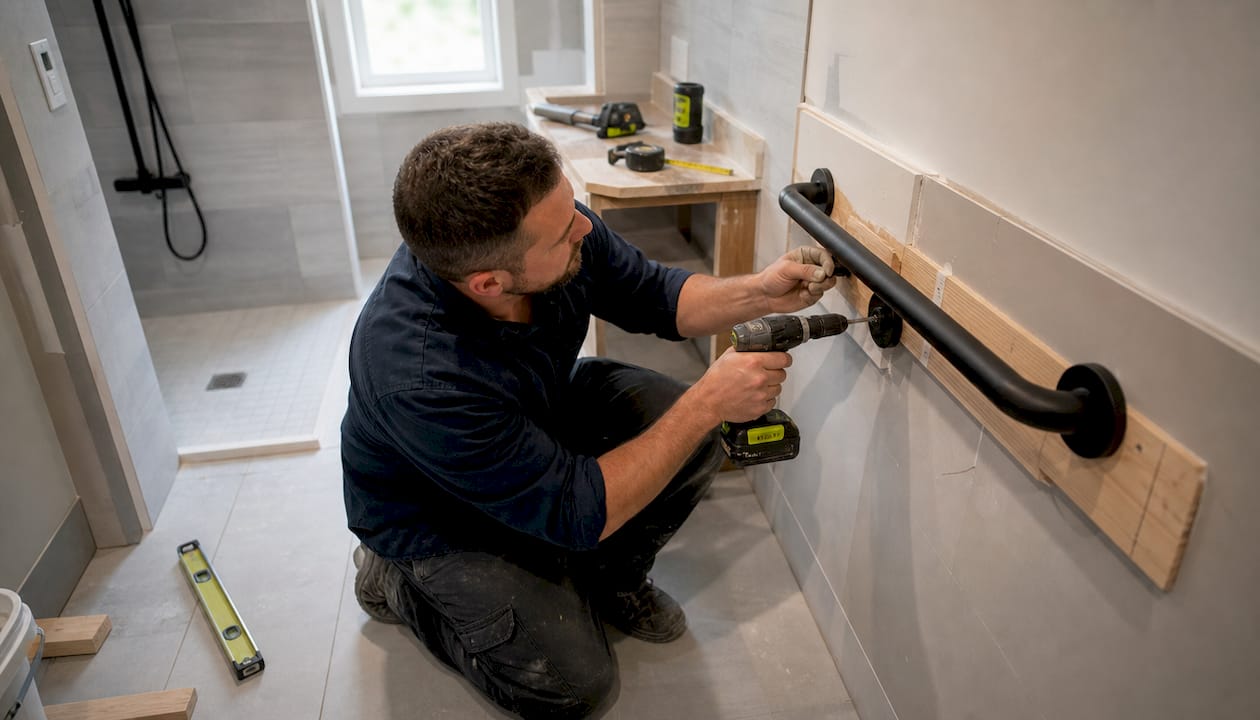
Grab bars are the single most effective safety feature in a senior bathroom. They must be mounted into structural blocking or wall studs, and grab bars must hold 250 lbs per U.S. Access Board standards. Place them beside the toilet, along the shower entry, and on the shower wall at a height that matches the user’s natural grip.
Non-slip flooring is where most people get it wrong. Standard matte tile looks safe but becomes slippery when wet. The correct standard is a DCOF rating of 0.60 or higher for any wet-area floor. Textured porcelain and small-format mosaic tiles with more grout lines both meet this threshold reliably.
Comfort-height toilets sit at 17–19 inches, which reduces strain on hips and knees when sitting and standing. If a full toilet replacement is not in the budget yet, raised toilet seats cost $30–$80 and provide a workable short-term solution.
Lighting deserves more attention than it usually gets. Bright, even overhead lighting reduces shadows that mask trip hazards. Add night lights with motion sensors along the path from the bedroom to the bathroom. Seniors with vision changes need higher lumen output than younger adults, so do not simply replace bulbs with equivalent wattage.
Curbless walk-in showers eliminate the step-over entry that causes most shower falls. A zero-threshold design works for walkers and wheelchairs and is far safer than a walk-in tub for most seniors. Walk-in tubs require stepping over a high threshold to enter, which creates its own risk.
Pro Tip: Install a fold-down teak or tiled bench inside the curbless shower. Seated bathing reduces fatigue and fall risk, and the bench can be folded away when not needed.
2. How to plan the layout and structural changes for accessibility
Good accessible bathroom design starts behind the walls, not at the fixture showroom. Structural decisions made early save significant money later and make every surface upgrade more effective.
- Doorway width: Widening doorways to 36 inches accommodates walkers and wheelchairs. Standard 32-inch doors block most mobility aids entirely.
- Lever-style handles: Lever door handles require no grip strength and work with a closed fist or elbow. Round knobs are difficult for anyone with arthritis or reduced hand strength.
- Structural blocking: Install wood blocking between wall studs during the framing stage. This is the most cost-effective time to prepare for grab bars. Installing grab bars after tile work costs roughly three times more than blocking during framing.
- Linear drains: A linear drain allows a single-slope floor in the shower, which is flat and stable underfoot. Traditional center drains create a bowl shape that tilts the floor in four directions, making it unstable for shower chairs and walkers.
- Turning radius: Plan for a 60-inch turning radius inside the bathroom if wheelchair use is possible in the future. This is the ADA standard for full wheelchair maneuverability.
Pro Tip: Talk to your contractor about “blocking everywhere” in the shower and toilet walls, not just where you plan to put grab bars today. Needs change, and pre-blocked walls let you add bars later without opening up tile.
3. What do senior bathroom remodels actually cost?
Cost is the question most caregivers and seniors ask first, and the range is wide depending on the scope of work. Here is a realistic breakdown.
| Scope | Typical Cost | What It Includes |
|---|---|---|
| Basic safety refresh | $1,500–$3,000 | Grab bars, comfort-height toilet, improved lighting |
| Mid-range accessible remodel | $7,000–$13,000 | Curbless shower, non-slip tile, widened door, blocking |
| Full ADA-compliant remodel | $15,000–$35,000 | Complete layout redesign, roll-in shower, all accessibility features |
The financial case for remodeling is strong. A mid-range renovation costing $7,000–$13,000 can extend safe independent living by 5–10 years. A $25,000 renovation saves the equivalent of assisted living costs in under six months. Assisted living in Alberta typically runs several thousand dollars per month, so the math favors remodeling decisively.
On funding, Medicare does not cover bathroom remodels but may cover some medically necessary safety equipment when prescribed by a physician. Check with Alberta Health Services and local seniors’ programs for provincial grants or subsidies that may apply to your situation. The Calgary bathroom renovation cost guide from Statera Contracting breaks down local pricing in more detail.
4. What materials and finishes work best for senior bathrooms?
The best materials for an accessible bathroom renovation meet safety standards without looking clinical. Modern accessible design can be stylish and dignified, and the right material choices make that possible.
Flooring options ranked by safety and appeal:
- Textured luxury vinyl plank: Warm underfoot, genuinely slip-resistant, and forgiving if someone does fall. A strong choice for seniors who want comfort.
- Matte porcelain tile (DCOF 0.60+): Durable and water-resistant. Choose smaller formats (2-inch or 4-inch tiles) for more grout lines and better grip.
- Mosaic tile: The high grout-line ratio provides excellent traction. Works well on shower floors specifically.
Grab bar finishes have improved dramatically. Brushed nickel, matte black, and oil-rubbed bronze grab bars now match standard bathroom hardware lines. You do not have to choose between safety and style.
Lighting fixtures should be rated for damp or wet locations in the bathroom. Choose fixtures that diffuse light evenly rather than creating bright spots and dark corners. LED panels with a color temperature of 3,000–4,000K provide clear, natural light without harsh glare.
Aging-in-place features add resale appeal when they are integrated thoughtfully into the design. A curbless shower with quality tile and a built-in bench reads as a luxury feature to most buyers, not medical accommodation.
5. How to customize a senior bathroom remodel for individual needs
No two seniors have the same mobility level, health conditions, or bathing preferences. A good disability bathroom renovation starts with an honest assessment of current and likely future needs, not a generic checklist.
- Arthritis and limited grip: Prioritize lever handles, rocker light switches, and touchless or single-lever faucets. These reduce the fine motor demands of every bathroom task.
- Vision impairment: Use high-contrast color between the floor and wall, between the toilet and floor, and at the shower entry edge. Contrasting colors help people with low vision navigate safely.
- Walker or rollator users: Focus on the 36-inch doorway, the turning radius, and a fold-down shower bench. The shower floor must be flat and the threshold must be zero.
- Wheelchair users: A roll-in shower with a linear drain, a wall-mounted sink with knee clearance underneath, and a comfort-height toilet with side transfer space are the core requirements.
- Walk-in tub vs. curbless shower: Walk-in tubs suit seniors who strongly prefer soaking baths and have good balance while seated. Curbless showers are safer for most people because entry and exit happen standing, with no high threshold to cross.
Bidet toilet seats deserve a mention here. They significantly reduce the physical effort of personal hygiene and support independence for seniors with limited reach or mobility. Many models install on existing toilets without any plumbing changes.
The goal of a well-designed senior-friendly bathroom upgrade is a space that feels like a well-designed bathroom, not a medical facility. Dignity matters as much as safety.
Key takeaways
Bathroom remodeling for seniors delivers the highest safety return when structural elements like blocking, drainage, and doorway width are planned before any tile or fixture is selected.
| Point | Details |
|---|---|
| Structural prep saves money | Install grab bar blocking during framing to avoid costly tile removal later. |
| DCOF 0.60+ is the floor standard | Standard matte tile is not slip-resistant enough; verify the DCOF rating before purchasing. |
| Curbless showers outperform walk-in tubs | Zero-threshold entry eliminates the most common shower fall point for most seniors. |
| Remodeling beats assisted living costs | A $25,000 renovation pays for itself in under six months compared to assisted living fees. |
| Personalization drives real safety | Match features to the individual’s mobility level, not a generic accessibility checklist. |
What I have learned from senior bathroom projects
By Patrick
After working on accessible bathroom renovations across Calgary and the surrounding area, the pattern I see most often is this: families wait too long. They call us after a fall, or after a parent has already moved to assisted living, and the remodel becomes reactive instead of planned. The cost and the stress are both higher at that point.
The two upgrades that consistently deliver the most safety per dollar are grab bar blocking and non-slip flooring. Neither is glamorous, but both address the root causes of bathroom falls directly. I have seen beautifully tiled bathrooms with zero structural blocking behind the walls, which means any grab bar mounted there is essentially decorative. That is a contractor oversight that costs the homeowner dearly when they need to retrofit.
My honest advice: start the conversation about accessible bathroom design before there is an urgent need. The best time to install blocking is during any bathroom renovation, regardless of age. If you are already planning a bathroom renovation in Calgary, adding senior-friendly features at that stage costs a fraction of what a standalone retrofit costs later. Plan ahead, choose materials that meet the DCOF standard, and do not skip the structural work just because it is invisible.
— Patrick
Statera Contracting’s approach to senior bathroom renovations
Planning a safe, accessible bathroom in Calgary or the surrounding area is exactly the kind of project Statera Contracting handles with care and precision. We work with seniors and their families to assess current needs, plan for future mobility changes, and build bathrooms that meet ADA-aligned standards without looking institutional.

Our team handles the structural work, the material selection, and the finish details from a single point of contact. We check doorway widths, drainage design, blocking placement, and lighting plans before a single tile goes up. If you are ready to create a bathroom that supports independence and reduces fall risk, contact Statera Contracting for a consultation. We serve Calgary and surrounding communities throughout Alberta.
FAQ
How much does a senior bathroom remodel cost in Alberta?
A basic safety refresh with grab bars, a comfort-height toilet, and improved lighting typically costs $1,500–$3,000. A full ADA-compliant remodel with a curbless shower and layout changes ranges from $15,000–$35,000.
What is the most important safety feature in a senior bathroom?
Grab bars mounted into structural blocking provide the most direct fall prevention. They must meet the U.S. Access Board standard of holding 250 lbs and should be placed in the toilet, shower entry, and shower wall.
Does Medicare cover bathroom remodeling for seniors?
Medicare does not cover bathroom remodels. It may cover some medically necessary safety equipment when a physician prescribes it, but renovation costs are generally out of pocket or covered through provincial programs.
What flooring is safest for a senior bathroom?
Flooring with a DCOF rating of 0.60 or higher is the correct standard for wet bathroom areas. Textured luxury vinyl, small-format matte porcelain, and mosaic tile all meet this threshold and provide reliable traction.
Should I choose a walk-in tub or a curbless shower for a senior bathroom?
A curbless shower is safer for most seniors because it eliminates the high threshold entry that walk-in tubs require. Walk-in tubs suit seniors who prefer soaking baths and have stable seated balance.
Recommended
- Home Renovations Calgary 2026 Owner’s Roadmap | Statera | Statera Contracting
- Bathroom Renovation Calgary 2026 Cost Guide | Statera | Statera Contracting
- Bathroom Renovation Calgary | Licensed Contractor | Statera | Statera Contracting
- The Many Ways to Skin a Reno | Calgary Renovation Tips | Statera Contracting