No basement is completely flood-proof, but a Calgary basement can be made much more resistant. The work falls into three layers: keep water away from the foundation, stop sewage from backing up through the floor drain, and finish the space with materials and layouts that cope with a wet event. The City of Calgary is clear that even its recommended measures may minimize damage but will not fully protect a home from river flooding. The goal is to cut the risk and the cost of a bad day, not to promise it never happens.
This guide walks through what causes basement flooding here, which measures matter most, what needs a permit, and how to plan a basement renovation so it holds up. If you are about to finish or renovate a basement, it is the cheapest moment to do this properly.
Statera ContractingPlan a More Flood-Resistant BasementStatera Contracting renovates Calgary basements, helping you consider flood resilience while planning a basement project.Explore renovation servicesTL;DR
- Calgary basements flood in four main ways: overland water, sewer backup, groundwater seepage and poor lot drainage. Each has a different fix.
- Start outside: grade soil away from the foundation, keep eavestroughs clear, and discharge downspouts at least 1.5 to 2 metres from the house.
- Inside, a working sump pump and a backwater valve do the heavy lifting. Installing a backwater valve needs a plumbing permit and a qualified plumber.
- Plan finishes with water in mind before you frame: moisture-tolerant materials, accessible mechanicals and no valuable items on the floor.
- If water is already coming in, stay out of the basement, call 911 for gas or electrical danger, and contact your insurer.
Table of Contents
- Why Calgary basements flood
- Layer one: keep water outside
- Layer two: the plumbing inside
- A tiered approach to deciding what to do first
- Layer three: finish the basement so it can take a hit
- Buying a home with a basement
- Our perspective
- Plan a flood-smart basement with us
- Spring and storm-season checklist
- If water is already coming in
- FAQ
- Sources
Why Calgary basements flood
Before choosing a fix, you need to know which kind of water you are dealing with. The City of Calgary lists the main causes of basement flooding as:
- Overland water entering through openings such as window wells, doors and low walls.
- Sewer backup, from either the sanitary or storm system.
- Seepage into the basement from a rising groundwater table.
- Poor lot drainage, where water pools against the foundation.
These are not interchangeable. A backwater valve does nothing for a window well that fills with rain, and a grading fix does nothing for a sewer line that surcharges during a storm. A sensible plan matches each risk to a measure.
River flooding versus stormwater flooding
Most people think of the 2013 flood, but river flooding is only part of the picture. The City notes that river flooding typically happens between mid-May and mid-July, when heavy mountain and foothill rain combines with snowmelt. Many homes far from the river still have wet basements, because stormwater and sewer backup can strike anywhere in the city.
The trend is also worth knowing. City climate projections suggest rainstorms shorter than a day could see a 28% increase in volume by the 2050s, which is likely to make stormwater flooding more frequent. A basement you finish today should be built for the weather it will see in 20 years, not just the weather it has seen.
Layer one: keep water outside
The Extension service at the University of Minnesota makes a point that applies just as well in Alberta: the most effective approach to a moisture problem is to find and control the source of the water first, rather than relying only on defensive measures inside. That means starting outdoors, where the fixes are often the cheapest.
Lot grading
The City recommends positive lot drainage: soil that slopes away from the foundation so water runs off instead of toward the wall. Look at the ground around your house after a heavy rain. If water pools within a couple of metres of the foundation, or the soil has settled against the wall, that is your first job.

Two things are easy to miss. First, grading drifts over time as soil settles, so a lot that drained well when the house was built may not now. Second, the City describes keeping positive lot drainage as a permanent responsibility of the homeowner, not a one-time project. Landscaping, a new deck or a patio can change how water moves across your lot without you noticing.
Eavestroughs and downspouts
Roof water is a large volume delivered right beside your foundation. Keep eavestroughs and downspouts clean, and make sure the water is directed at least 1.5 to 2 metres away from the home. A downspout that dumps beside the wall undoes good grading. Extensions are inexpensive and worth doing before anything else.
Foundation cracks and exterior concrete
Cracks in the foundation wall or a settled slab can let water in, and fixing them often involves excavation. That is specialist work, and it is worth reading about concrete foundation work and how footings and slabs are built so you can ask informed questions of whoever you hire. We are renovators, not foundation-repair specialists. When a basement needs exterior excavation or crack injection, we coordinate that work with the right trade before we finish the space, so we never close in a wall over an unresolved leak.
Window wells and storm drains
Window wells are a classic overland entry point, especially in basements with egress windows. Keep them clear of debris and make sure they drain. The City also asks residents to keep nearby storm drains clear of debris, ice and snow. If a drain near your home is blocked, water has nowhere to go but your lot.
Layer two: the plumbing inside
Once exterior water is managed, the next job is dealing with the water that still reaches the foundation and the sewer line.
Sump pump
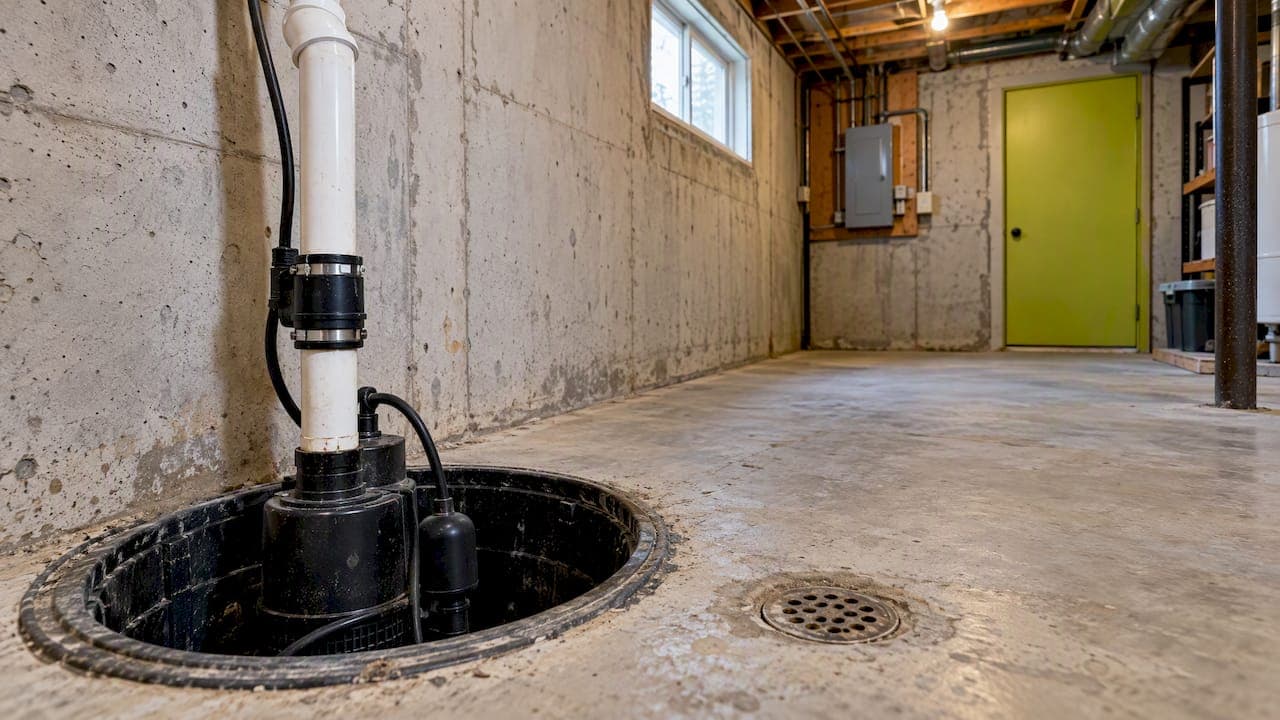
A sump pump collects water that reaches the foundation drainage and sends it out of the house. The City notes that sump pumps remove foundation water and should be inspected and maintained. A simple test is to pour water into the pit and confirm the pump switches on automatically.
Build that check into your routine, ideally in early spring before the snowmelt and again before the heavy rain season. Sump pumps depend on power, and storms often knock it out. A backup power option is worth discussing with a qualified professional, and it matters most for a basement you plan to use as living space.
Backwater valve
Sewer backup is the cause people overlook, and it is the most unpleasant. A back-flow prevention device, usually called a backwater valve, helps prevent sewage from entering your basement. Not every home has one. The City suggests locating your floor drain, clean-out and any existing valve, and considering one on the sewer pipe or on basement showers, toilets and sinks if you do not have it.
There is a code angle here too. Alberta’s plumbing code requires below-grade fixtures, including floor drains and basement bathroom fixtures, to be protected from sewer backup from the street. If you are adding a basement bathroom or wet bar, this directly affects your plan. Our bathroom permit guide covers how that approval typically goes.
Permits for the work
Installing a backwater valve is not a weekend DIY job. The City states that a plumbing permit is required and that the installation should be completed by a qualified professional plumber. The Planning Services Centre can tell you whether your home needs a back-flow device. If you are not sure who pulls what, our guide on who pulls permits in Calgary explains it in plain terms.
A tiered approach to deciding what to do first
Not every home needs every measure on day one. The Institute for Catastrophic Loss Reduction suggests a Good, Better, Best approach to retrofitting, starting with essentials such as grading and backwater valves. That logic gives a practical order:
| Priority | Measure | What it addresses | Who usually does it |
|---|---|---|---|
| First | Grading, eavestrough and downspout fixes, clear window wells | Overland water, poor lot drainage | Homeowner or landscaper |
| First | Backwater valve (plumbing permit) | Sewer backup | Qualified plumber |
| Next | Sump pump check or upgrade, backup power | Groundwater seepage | Plumber or electrician |
| Next | Foundation crack repair, exterior drainage work | Seepage through walls and floor | Foundation or waterproofing specialist |
| During renovation | Moisture-tolerant finishes, smart layout | Limits damage and cleanup cost | Renovation contractor |
The last row is where a renovation matters most, and it is the part many flood guides skip.
Layer three: finish the basement so it can take a hit
If you are already planning to finish or renovate your basement, you can reduce what a flood would cost you. We cannot make walls waterproof by choosing paint, but we can make smart choices about what sits where.
Flooring and finishes
Flooring is the biggest exposed surface. Hard, non-absorbent surfaces such as luxury vinyl plank and tile are easier to dry and clean than wall-to-wall carpet, which holds water and is hard to save once soaked. If you want warmth, area rugs you can lift are a better trade-off than glued-down carpet. For a wider look at the decision, our basement finishing guide covers flooring, framing and layout in more detail.

Layout and mechanicals
Where things go matters as much as what they are made of:
- Keep the furnace, hot water tank and electrical panel accessible, and consider raising critical equipment off the floor where the layout allows.
- Place the bathroom and any wet bar near the existing drain stack, and make sure the fixtures are protected from backup.
- Leave access panels at the sump pit, the backwater valve and the main shut-offs so you can service them without cutting into drywall.
- Plan outlets and wiring so they are not at floor level in the most vulnerable zones.
These are small decisions at the framing stage and expensive ones afterward. We check them with you during design, before any drywall goes up.
Ceiling height, egress and code
Flood planning also touches code. Raising a floor, adding a sump or changing a layout can affect ceiling height and egress. Our guide to basement ceiling height rules explains the 1.95 m threshold that inspectors look at, so you do not solve a water problem and create a code problem.
Budget and return
Flood-smart choices usually add modest cost to a basement project, mostly in layout, finishes and access. For realistic numbers on the whole job, see our breakdown of basement renovation costs in Calgary. If a legal suite is part of your plan, the basement ROI guide is worth reading alongside it.
Buying a home with a basement
If you are buying rather than renovating, the basement deserves attention at inspection. Staining on lower walls, a musty smell, efflorescence on concrete, or a sump pit with no clear discharge line are all things to ask about. Understanding how a home inspection contingency works in Canada helps you build in time to have the basement properly assessed before you are committed. Ask whether a backwater valve is installed, and when the sump pump was last tested.
Our perspective
We are a family-owned renovation company, and most of the basements we see are being finished for the first time or reworked after years of use. The most common mistake we run into is treating water as an afterthought, something to deal with once the drywall is up. It should be the first conversation.
Our approach is simple. Before we design anything, we look at how water reaches and leaves the house: grading, downspouts, window wells, the sump, the floor drain. If something needs a specialist, such as foundation repair or a plumber for a backwater valve, we say so plainly and sequence it ahead of the finishing work. Permits and code compliance are part of how we run every project, and design is included when you build with us.
We also think homeowners should hear the honest version: no contractor can promise a basement will never see water. What we can do is make sure the space is built so that if water does come, the damage is smaller, the cleanup is faster and nothing critical is trapped behind a wall.
— Patrick
Plan a flood-smart basement with us
If you are thinking about finishing or renovating your basement, we can plan the layout, finishes and permits with water risk in mind from the first meeting. Our Basement & Living Spaces service covers finishing and legal suites, and you get a single team that manages the project day to day and keeps you updated. Book a free consultation and bring your questions about drainage, mechanicals and layout.

You can also start from our main site to see the rest of our residential and commercial work.
Spring and storm-season checklist
A short routine does more than most people expect. The City advises homeowners to check foundation grading, eavestroughs and downspouts, sump pumps and storm drains before heavy rain and snowmelt. A practical version:
- Walk the lot after rain and note where water collects.
- Clear eavestroughs and confirm downspouts discharge well away from the wall.
- Clear window wells and any nearby storm drain of debris, ice and snow.
- Pour water into the sump pit and confirm the pump starts on its own.
- Locate your floor drain, clean-out and backwater valve, and make sure you can reach them.
- Move anything valuable off the basement floor before a forecast storm.
If water is already coming in
Safety comes before salvage. The City’s guidance is to stay out of the basement if water is seeping in, and to call 911 if there is gas or electrical danger. It also states that the City does not pump out basements.
For a sewer backup, stay out of affected areas and contact your insurance company. If natural gas appliances are affected, contact ATCO Gas, and if electrical systems are affected, contact ENMAX, as listed on the City’s home maintenance page. Do not restart affected appliances or switch on wet electrical equipment yourself.
FAQ
Can you stop a basement from flooding?
You can reduce the risk a lot, but not remove it. Good grading, clear downspouts, a working sump pump and a backwater valve address most everyday causes. The City says its recommended measures may minimize damage but will not fully protect a home from river flooding.
Do I need a permit to install a backwater valve in Calgary?
Yes. A plumbing permit is required, and the work should be done by a qualified professional plumber. The Planning Services Centre can confirm what your home needs.
What is the cheapest thing I can do to protect my basement?
Start outside. Check that soil slopes away from the foundation, clean your eavestroughs, and extend downspouts so water lands at least 1.5 to 2 metres from the house. These steps cost little and deal with the most common source of seepage.
Should I finish my basement if it has had water before?
Only after the source is found and addressed. Finishing over an unresolved leak traps moisture behind walls and floors. We would sequence any foundation, drainage or plumbing work first, then plan flood-tolerant finishes and keep mechanicals accessible.
Sources
- Climate hazards: Heavy rain and flooding, City of Calgary
- Why does flooding happen in Calgary?, City of Calgary
- Guide for Calgarians: Climate resilient home handbook, City of Calgary
- Climate ready measures: Water management, City of Calgary
- Home maintenance: electrical, plumbing and gas systems, City of Calgary
- Storm drains in Calgary, City of Calgary
- Basement flooding and seepage, City of Calgary
- Moisture in basements: causes and solutions, UMN Extension
- Basement flood protection advice: Good/Better/Best, ICLR