Expect to pay about $8 to $15 per square foot installed for electric radiant heat and $10 to $25 per square foot for hydronic systems, not counting the boiler or heat pump that powers them, according to cost data compiled for Canadian projects. Electric suits a single bathroom or kitchen zone, while hydronic makes more financial sense once you’re heating a whole floor or a new build. The breakdown below shows exactly where that money goes.
Statera ContractingPlan Your Calgary RenovationStatera Contracting handles Calgary home renovations, including kitchens, bathrooms and basements, as well as projects in nearby areas.Explore renovation servicesTL;DR:
- A 45 square foot bathroom retrofit typically totals $2,500 to $6,000, with demolition and finish work affecting the final cost.
- Retrofit projects generally cost 15% to 30% more than new construction because demolition, subfloor repairs, and protecting finished rooms add labor.
- A 2,000 square foot hydronic system costs $20,000 to $50,000 for the floor system, plus $8,000 to $18,000 for a boiler or heat pump.
- A programmable thermostat with a floor sensor can help keep a 45 square foot bathroom below $10 monthly at Alberta’s 2025 to 2026 default rates.
- A new dedicated circuit typically requires an electrical permit in Calgary, while hydronic work involving a boiler may also require a mechanical permit.
Table of Contents
- Installed cost breakdown: per-square-foot ranges and retrofit vs new construction
- Electric vs hydronic: which one makes sense for your project
- Typical project budgets and itemized examples
- What heated floors cost to run each month
- Permits, code, and contractor considerations in Calgary
- How to budget and get an accurate quote
- What a commercial heated-floor timeline looks like from start to finish
- Full cost breakdown for commercial heated-floor projects
- Why Calgary homeowners keep asking about radiant heat
- Statera Contracting: how we help Calgary homeowners with heated-floor projects
- FAQ
- Sources
Installed cost breakdown: per-square-foot ranges and retrofit vs new construction
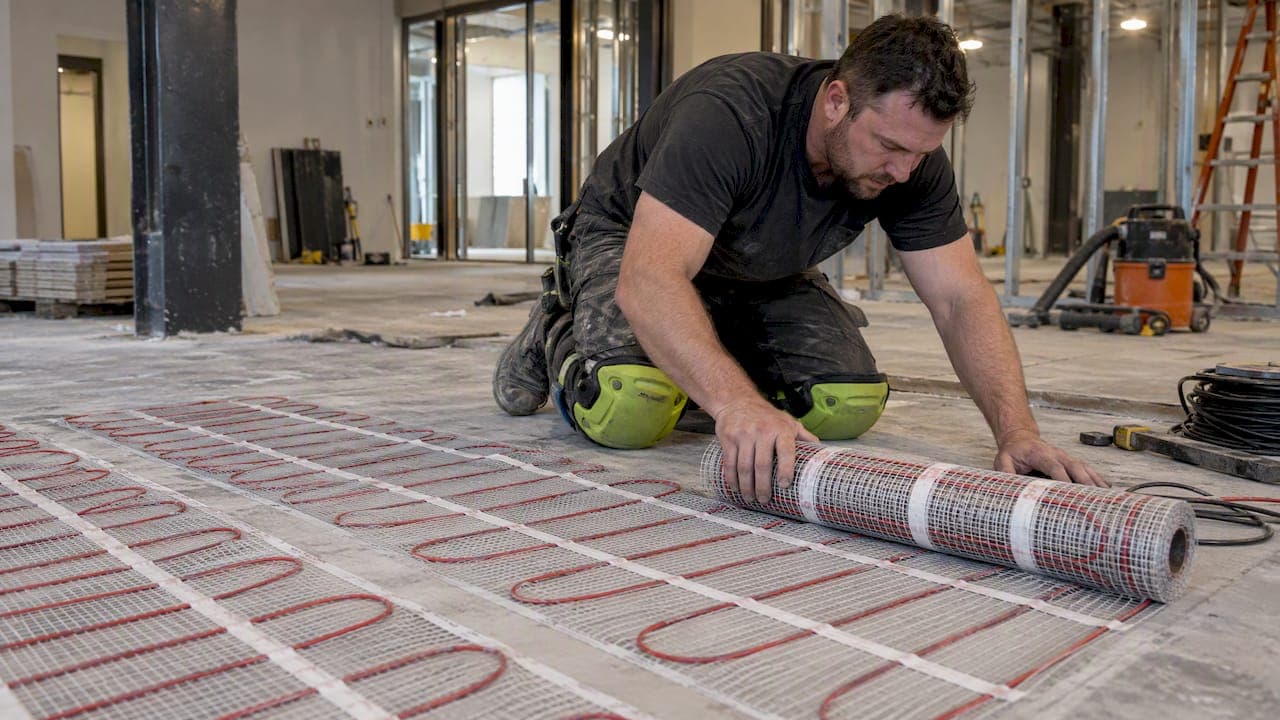
Electric radiant mats and cable systems run about $8 to $15 per square foot installed, a figure that covers the heating mat or cable, a programmable thermostat, a dedicated electrical circuit, and labour for a straightforward retrofit, according to cost data compiled for Canadian projects. Hydronic radiant systems land at $10 to $25 per square foot for the tubing and distribution layer alone. The boiler, air-to-water heat pump, and manifold are separate line items, and those can add thousands depending on the home’s size and existing mechanical setup.
Retrofitting an existing floor costs more than building radiant heat into new construction, mainly because of demolition, subfloor prep, and the extra coordination needed to protect finished spaces during the work.
- A 40 to 60 square foot bathroom retrofit with electric mats typically runs $2,500 to $6,000 all-in, according to cost data compiled for Canadian projects.
- A 2,000 square foot home with hydronic radiant throughout can range from roughly $20,000 to $50,000 for the floor system alone, before the heat source.
- New construction keeps costs lower because the subfloor is already open and trades are already on site.
Electric vs hydronic: which one makes sense for your project
The right system depends on scale more than preference. Electric mats cost less upfront and install in a single day for a small room, but they run on household electricity, which makes them pricier to operate across large areas. Hydronic systems cost more to install because they need a boiler or heat pump, a manifold, and a plumber alongside the electrician, but they tend to be cheaper to run once the heated area gets large.
Industry estimates suggest hydronic radiant can be roughly 40 to 60% cheaper to operate than electric resistance heating over large, continuous areas, according to Builders Ontario. That gap widens in a Calgary winter, when a system runs for months rather than weeks.
- Electric systems win on install speed and upfront cost for one or two rooms.
- Hydronic systems win on operating cost once you’re heating more than a few hundred square feet continuously.
- Insulation quality and your finished floor material (tile conducts heat better than engineered hardwood) both affect how efficiently either system performs.
Pro Tip: If you’re only heating a bathroom or ensuite, electric almost always pays for itself faster than hydronic ever will.
Typical project budgets and itemized examples
Here’s what a few common Calgary projects actually look like once every line item is accounted for:
- Bathroom retrofit (45 sq ft): electric mat and thermostat ($900 to $1,600), new dedicated circuit ($400 to $700), labour and tile coordination ($1,200 to $3,700), landing the total near $2,500 to $6,000, according to cost data compiled for Canadian projects.
- Kitchen zone (150 sq ft): electric radiant runs $1,200 to $2,250 for the mat system, plus labour, tile or stone flooring, and electrical work, often landing between $3,000 and $6,500 depending on finish choices.
- Whole-home hydronic (2,000 sq ft): tubing and manifold at $10 to $25 per square foot ($20,000 to $50,000), plus a boiler or air-to-water heat pump that commonly adds $8,000 to $18,000 depending on capacity and efficiency.
- Retrofit premium: expect 15 to 30% above new-construction pricing for the same square footage, driven by demolition, subfloor repair, and protecting finished rooms during the work.
Flooring choice moves these numbers too. Tile and stone transfer heat efficiently and keep operating costs down, while thick carpet or engineered wood insulates against the very heat you’re paying for.
What heated floors cost to run each month
Heated floors draw roughly 10 to 15 watts per square foot, which gives you a simple way to estimate monthly cost. A 45 square foot bathroom at 12 watts per square foot draws about 540 watts, or 0.54 kW, and running that for three hours a day uses about 1.6 kWh daily.
Alberta’s electricity prices under the Rate of Last Resort for 2025–2026 are about 12.01–12.06 cents per kWh, which puts that bathroom’s energy cost at well under $10 a month, according to UCA Helps. A whole-home hydronic system covering 2,000 square feet costs considerably more to run in deep winter, though the exact figure depends on your boiler’s efficiency and your gas or electricity contract.
- Daily administration fees on your utility bill add a small fixed cost on top of the per-kWh rate.
- A programmable thermostat with a floor sensor cuts runtime by heating only when you’re actually using the room.
- Zoning separate areas (bathroom versus kitchen versus basement) prevents paying to heat rooms you’re not standing in.
Permits, code, and contractor considerations in Calgary
Most hydronic installations involving a new boiler or significant electrical work need a mechanical or electrical permit in Calgary, and the city’s own guidance lays out submission routes and contacts for exactly this kind of project, according to City of Calgary permit documentation. Electric mat installations tied into a new dedicated circuit typically need an electrical permit as well.
- Confirm your contractor pulls permits directly rather than leaving that step to you.
- Ask whether the project needs a mechanical permit, an electrical permit, or both.
- Request proof of licensing and insurance before signing anything.
Pro Tip: A permit isn’t paperwork for its own sake. It’s what protects your home insurance if something ever goes wrong with the wiring or plumbing later.
Skipping permits to save time usually costs more later, through rework, failed inspections, or disputes with insurance after the fact.
How to budget and get an accurate quote
Before you book a quote, gather the basics: room dimensions, photos of the existing floor and electrical panel, your preferred finish material, and whether the project is a standalone bathroom or part of a larger renovation.
- Measure the heated area and note the current flooring so the contractor can price demolition accurately.
- Flag any electrical panel upgrades or subfloor repairs you suspect are needed, since these change the quote significantly.
- Ask about timelines: a bathroom retrofit often takes 3 to 5 days, while a whole-home hydronic install can run several weeks depending on how many trades need to coordinate.
- Ask directly about permit handling, daily communication during the build, and what’s covered under warranty.
Clear answers to those questions upfront generally mean fewer surprises once work begins.
What a commercial heated-floor timeline looks like from start to finish
Commercial projects, think restaurant kitchens, retail floors, or office common areas, move through the same basic stages as residential jobs, but with more coordination between trades and often tighter deadlines tied to a lease or opening date.
The process typically starts with a site visit and heat-loss assessment, which takes a day or two and determines whether electric or hydronic makes sense for the space. Design and permit submission follow, and this stage often takes one to three weeks in Calgary depending on the scope of mechanical or electrical work involved. Once permits are approved, demolition of the existing floor and any necessary subfloor repair typically takes three to seven days for a mid-sized commercial space.
Installation of the heating system itself, whether electric mats or hydronic tubing and manifold, usually runs three to ten days depending on square footage and whether a new boiler or heat pump needs to be plumbed in. Flooring installation over top (tile, polished concrete, or engineered product) adds another few days to a week. Final inspection and system testing close out the project, confirming the heating elements work correctly before the space reopens.
A straightforward commercial bathroom or small retail zone can go from first site visit to finished floor in roughly three to five weeks. A full restaurant kitchen or multi-zone retail build with hydronic heat often takes six to ten weeks once permitting and trade scheduling are factored in.

Full cost breakdown for commercial heated-floor projects
Commercial heated-floor budgets have more moving parts than a residential bathroom, and unforeseen costs show up more often simply because commercial spaces carry more existing infrastructure to work around.
Commercial-grade tile or polished concrete adds cost compared to residential finishes.
Commercial labour rates in Calgary tend to run higher than residential due to scheduling complexity and after-hours work requirements for occupied buildings.
Permits add a smaller but necessary line item, generally a few hundred to a few thousand dollars depending on the mechanical and electrical scope, following the same permit process outlined in City of Calgary guidance.
Unforeseen expenses are common in older commercial buildings: outdated electrical panels needing upgrades, subfloor damage discovered during demolition, or asbestos testing in buildings constructed before the 1990s.

Why Calgary homeowners keep asking about radiant heat
Calgary winters make cold bathroom and basement floors a daily irritation, which is exactly why so many of our conversations start with a heated-floor question tucked inside a bigger bathroom or basement renovation. We balance that request against the realities of budget, permits, and the existing electrical panel, then build a plan that fits all three rather than treating heated floors as an afterthought. Every project runs on direct daily communication so you always know what’s happening and why.
— Patrick
Statera Contracting: how we help Calgary homeowners with heated-floor projects
When a heated floor is part of a bathroom renovation, a basement finish, or a larger home addition, we fold the permit work, electrical coordination, and tile scheduling into one fixed-price plan instead of leaving you to manage separate trades. We handle permit submissions directly with the city, and we keep you updated daily rather than leaving you guessing between site visits.

| What you get | Detail |
|---|---|
| Services covering heated floors | Bathroom Renovation, Basement & Living Spaces, Home Additions |
| Permit handling | Included as part of project management |
| Communication | Daily updates from the team managing your project |
| Quote process | Site visit, measurements, and a fixed-price proposal |
A bathroom renovation with a heated floor is one of the most requested upgrades we see across Calgary, and it’s easiest to budget correctly when it’s planned alongside the rest of the room rather than added in afterward. Start with a bathroom renovation quote or reach out through our contact page to talk through your project.
FAQ
Is radiant floor heat expensive to run?
Electric radiant heat is inexpensive to run in a small zone like a bathroom, often landing under $10 a month based on Alberta’s regulated default electricity rates. Running electric resistance heat across a whole home gets considerably more expensive, which is why hydronic systems are usually the better fit for large, continuous areas.
How much is a heat pump for a 2,000 sq ft house?
A heat pump sized to power a hydronic radiant system for a 2,000 square foot home commonly adds $8,000 to $18,000 on top of the tubing and manifold costs, depending on capacity and efficiency. The exact figure depends on your home’s heat-loss profile and whether the heat pump also handles domestic hot water.
What is the downside of underfloor heating?
Underfloor heating in large areas can cost more to operate if it’s electric resistance rather than hydronic, and installation disrupts the existing floor during a retrofit. Response time is also slower than forced-air heating, so it works best paired with good insulation and a programmable thermostat rather than as a quick heat source.
How much does a furnace cost in Calgary?
Furnace pricing varies by size, efficiency rating, and installation complexity, and isn’t the same budget category as radiant floor heating since the two serve different roles in a home’s heating system. For a renovation that includes heated floors, it’s worth discussing with your contractor whether your existing furnace or boiler setup can support the added load.
Does a heated floor installation need a permit in Calgary?
Most installations involving a new electrical circuit or a hydronic boiler need an electrical or mechanical permit in Calgary, following guidance from the City of Calgary’s permit documentation. A contractor who manages the permit submission directly helps avoid delays and keeps the installation compliant with local code.
Sources
- UCA helps — default rates (Rate of Last Resort)
- City of Calgary — contractors HVAC mechanical permit guidance
- Get A Better Quote — radiant floor heating costs (Ontario data, 2026)
- Builders Ontario — electric vs hydronic floor heating