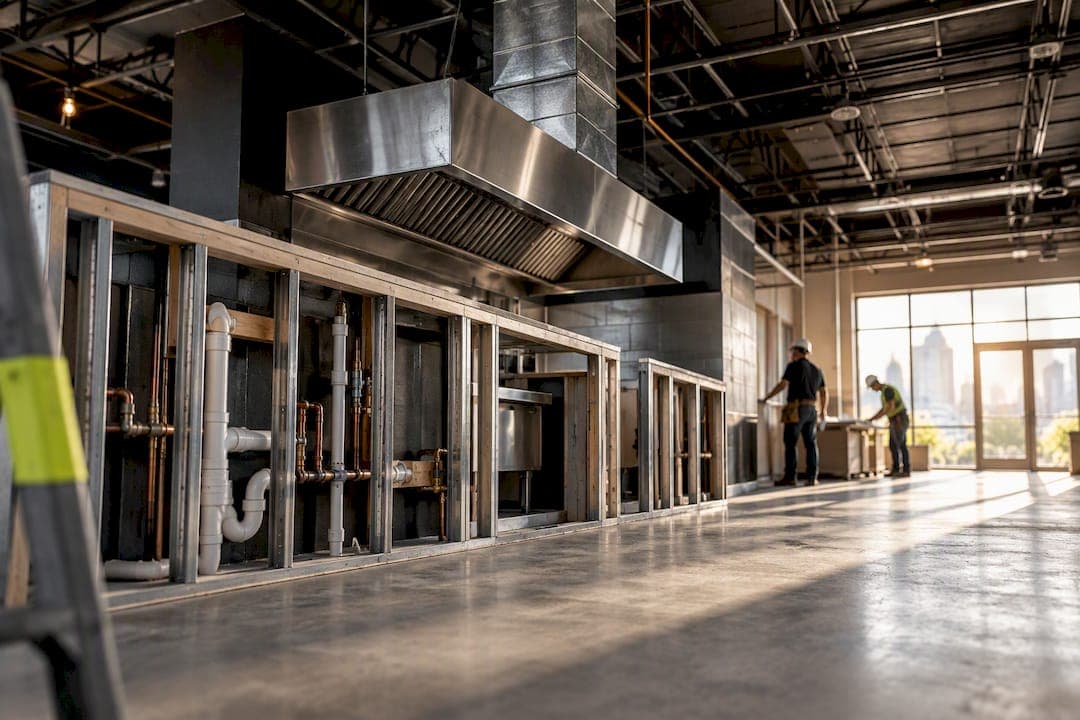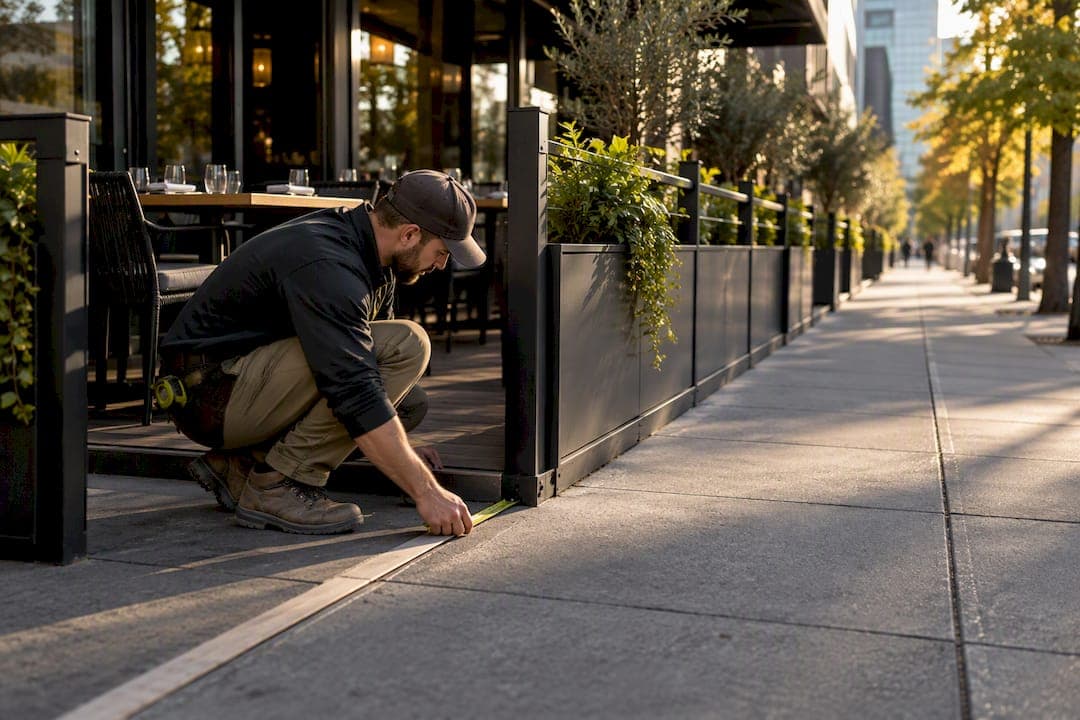
Most Calgary restaurants adding a patio need one of three approvals: a seasonal patio permit for public land, a development permit for private property, or a licence of occupation for a permanent public patio. Expect building, fire and health checks along the way, plus a 21-day appeal window on development permits. The fastest next step is to start a pre-application inquiry or submit online and contact the Planning Services Centre before you order a single chair.
TL;DR:
- A seasonal patio permit applies only to patios on public land and is approved from mid-May to mid-October, with fees proposed at $7.00 to $7.35 per square foot for 2025-2026.
- For patios on private land or spanning public and private areas, a development permit is needed, which includes a 21-day appeal period and may require a building permit for structural work.
- A licence of occupation is necessary for permanent, year-round patios with fixed structures on public land, and multiple permits might be needed for hybrid or structural projects.
- All outdoor food service patios must meet Alberta Health Services standards, and liquor licenses are contingent on a fire inspection clearance; along with permits, safety, fire, and health approvals are essential.
- Operating without proper permits risks enforcement actions including removal, order to close, and compromised licensing, especially if the patio encroaches on pedestrian paths or fire routes.
Statera Contracting — Plan Your Calgary Restaurant Renovation. Statera Contracting handles commercial renovation projects for Calgary restaurants, pubs and bars, including patio build-outs and broader improvements. Explore renovation services
Table of Contents
- 1. Types of patio permits in Calgary and when each applies
- 2. Which permits you need by location and project scope
- 3. Approvals, inspections and other agencies you’ll need to involve
- 4. Design, access and safety rules for public-property patios
- 5. Costs, current fee status and expected timelines
- 6. Common pitfalls, contractor tips and how professional support speeds approvals
- 7. How to apply: checklist, documents and practical steps
- 8. Public health considerations that still shape patio approvals
- 9. Penalties and enforcement for non-compliance with patio permit regulations
- 10. Renewal process and requirements for patio permits
- 11. A contractor’s view: when to hire a contractor and what to expect
- How Statera Contracting can help with patio build-outs and permits
- Authoritative City and provincial resources
- Sources
- FAQ
1. Types of patio permits in Calgary and when each applies
The City sorts patios into three categories, and which one applies depends almost entirely on where the patio sits and how long you plan to run it. Getting this classification wrong early is the single biggest cause of delay we see.
- Seasonal permit: for patios entirely on public property, like a sidewalk or a former parking lane, typically approved for mid-May to mid-October.
- Development permit: a discretionary permit for patios on private property or patios that span both private and public land, which comes with a notice posting and a 21-day appeal period.
- Licence of occupation: required when you want a permanent, year-round patio with fixed structures on public land.
A rooftop patio built entirely on your own leased space is a development permit case. A curbside patio taking over two parking stalls every summer is a seasonal permit case. A permanent enclosed patio built onto the sidewalk in front of a downtown restaurant usually needs a licence of occupation.
2. Which permits you need by location and project scope
Once you know where your patio sits, the permit path becomes a straightforward mapping exercise.
- Private property only: apply for a development permit, since the patio sits entirely on land you own or lease.
- Public property only: apply for seasonal permission if it runs seasonally, or a licence of occupation if it is permanent.
- Mixed private and public property: plan for both a development permit and a licence of occupation, since the three permit routes can apply simultaneously to one project.
- Structural additions: a raised platform, permanent roof or covering, or any load-bearing work will likely trigger a building permit on top of whichever land-use approval applies.
Before you commit to a design, run a pre-application inquiry with the Planning Services Centre. A short call at this stage confirms your classification and can save weeks of resubmission later.
3. Approvals, inspections and other agencies you’ll need to involve
A patio permit rarely travels alone. Several other approvals sit alongside it, and missing one late in the process is a common reason projects stall.
- Building permit: required when construction work exceeds certain thresholds under the Safety Codes Act, particularly for platforms, coverings or structural changes.
- Fire inspection: the Calgary Fire Department reviews tents, canopies, cooking setups and any special-event elements before occupancy.
- Alberta Health Services: food-establishment rules apply to any outdoor space used for food service, following provincial food-code requirements.
- AGLC: liquor-licensed patios need Alberta Gaming, Liquor and Cannabis approval, which typically follows a successful fire inspection rather than preceding it.
Food establishments must satisfy planning, building, fire and Alberta Health Services requirements before opening, and AGLC sign-off for alcohol service comes after the fire inspection clears. If your patio includes a working kitchen extension, our kitchen permit guide covers the inspection sequence for cooking equipment in more detail.
4. Design, access and safety rules for public-property patios
Public-property patios live and die on clearance and safety details. The City reviews these closely because a patio on a sidewalk or roadway affects everyone walking or driving past it, not just your customers.
- Pedestrian path: a minimum 2-metre clear path must run continuously and in a straight line along the sidewalk.
- Setbacks: patios need adequate distance from travel lanes and bike lanes, with defined start and end points from property lines.
- Accessibility: boardwalks and winter-patio elements must maintain a continuous, obstruction-free route for pedestrians of all abilities.
- Tents and cooking: canopies used over cooking equipment must meet ULC/CAN material standards, with minimum separations, extinguishers on hand and proper propane handling.
Pro Tip: Measure your pedestrian clearance with a tape measure before you submit drawings. A path that looks fine by eye often comes in under 2 metres once you account for menu boards, planters and server traffic.
5. Costs, current fee status and expected timelines
Fees have shifted in recent years, and that history matters for budgeting. Seasonal-patio fees were waived for a period, but city budget documents propose reintroducing them.
Proposed seasonal patio fee: $7.00 to $7.35 per square foot plus GST for the 2025 to 2026 service plan period, with a development permit fee referenced at $853 for 2026. That reintroduction makes early, complete submissions more valuable, since fee waivers previously gave operators more room to fix errors without extra cost.
Development permits generally move through circulation, notice posting and the 21-day appeal period before a decision, and seasonal permits are timed to the mid-May to mid-October window. Add time and budget when a building permit and its associated inspections are also required.

6. Common pitfalls, contractor tips and how professional support speeds approvals
The biggest mistake we see is assuming that permits from a previous tenant or a previous patio season carry forward. They usually don’t. A new operator, or even the same operator reopening after changes to the space, often triggers a fresh review against current safety codes.
- Pitfall: assuming a prior approval transfers automatically, when the City often reassesses the site under current code.
- Tip: run a pre-application inquiry and coordinate your building, fire and health submissions together rather than sending them one at a time.
- How a contractor helps: permit-ready drawings, properly sequenced inspections and direct liaison with the Planning Services Centre cut down on repeated revisions.
Coordinating these submissions together, rather than treating each agency as a separate afterthought, is what actually reduces rework and shortens the path to opening.
Pro Tip: Ask your contractor to submit building, fire and health documents in the same week. Reviewers often flag the same issue independently, and fixing it once instead of three times saves real calendar time.
7. How to apply: checklist, documents and practical steps
Before you submit anything, gather your documents. A complete package the first time is the single fastest route through the process.
Documents to prepare:
- A scaled site plan and patio layout showing dimensions and property lines.
- A materials list, seating count and railing or fence details where applicable.
- Elevation drawings if the patio includes any covering or raised structure, plus photos of the existing site.
Application steps:
- Sign up for a myID account with the City of Calgary before you start the online application.
- Submit your application and retain the Job Access Code (JAC) it generates for tracking.
- Post a site notice if your permit type requires one, then monitor your application status through VISTA.
- Contact the Planning Services Centre or e-mail Patios@calgary.ca for classification questions, call 311 to arrange inspections, and ask for a Senior Planning Technician when you need a pre-application review.
Our contractor roadmap for Calgary restaurant permits walks through how to sequence these steps when a building permit is also in play.
8. Public health considerations that still shape patio approvals
Patios became a survival tool for Calgary restaurants during the pandemic, and the City responded by making temporary patio expansions faster to approve. That emergency posture has since wound down, but its legacy is visible in how the current program is built.
Two habits from that period stuck around. First, the City’s seasonal patio program continues to emphasize accessibility, including the 2-metre clear pedestrian path requirement, partly because rapid pandemic-era expansions sometimes crowded sidewalks and drew complaints. Second, operators got used to fast turnarounds and sometimes still expect that pace today, even though standard review timelines, notice periods and the 21-day appeal window for development permits now apply in full.
Alberta Health Services requirements for food establishments haven’t relaxed either. Outdoor dining spaces still need to meet the same provincial food-code standards as indoor seating, covering things like handwashing access, food storage and pest control, regardless of whether the space is seasonal or permanent. If you’re planning a patio expansion this year, treat it as a standard application rather than assuming pandemic-era flexibility still applies. Build your timeline around the current process, not the shortcuts that existed a few years ago.

9. Penalties and enforcement for non-compliance with patio permit regulations
Operating a patio without the right permit, or outside the conditions of an approved one, puts your business at real risk. The City can order a patio removed or closed if it lacks proper approval, and an unresolved compliance issue can hold up other licences tied to the same address, including your business licence renewal.
Clearance violations are one of the more common enforcement triggers. A patio that encroaches on the required 2-metre pedestrian path, blocks a fire route, or extends past its approved boundary can be flagged during a routine inspection or after a complaint, and the City has revoked seasonal permits over exactly this kind of issue in the past. Fire code violations around tents, cooking equipment or propane handling carry their own enforcement risk, since these touch on life safety rather than just land use.
The practical fix is straightforward: keep your as-built patio matching your approved drawings. If you need to adjust seating, add a heater, or change your layout mid-season, check with the City before making the change rather than after. A quick call to 311 or the Planning Services Centre is far cheaper than an enforcement order that shuts your patio down during your busiest months.
10. Renewal process and requirements for patio permits
Seasonal patio permits aren’t a one-time approval. Because the program runs on an annual mid-May to mid-October cycle, most operators need to renew or reapply each year rather than assuming last year’s permit rolls forward automatically.
Renewal is generally simpler than a first-time application when your patio layout, seating count and materials haven’t changed, since the City already has your baseline on file. It gets more complicated if you’ve changed operators, altered the footprint, added a covering, or introduced new cooking equipment since your last approval. Any of those changes can trigger a fresh review rather than a straightforward renewal, particularly around fire and building safety.
Licences of occupation, since they cover permanent structures, tend to follow a different renewal timeline tied to the licence term rather than the seasonal calendar. Development permits themselves don’t typically need annual renewal once granted, but the business licence tied to your patio operation still needs its own periodic renewal. The safest habit is to start your renewal application well before the seasonal cutoff, so any code changes or new requirements from the past year don’t catch you off guard right before patio season opens.
11. A contractor’s view: when to hire a contractor and what to expect
Professional help earns its cost fastest on permanent patios, anything with liquor service, or projects with structural work. For a straightforward seasonal patio, a well-prepared owner can often manage the application directly.
When a contractor manages submissions and inspections together, realistic timelines shrink because fewer revision cycles happen. The practical trick with City reviewers is simple: answer their questions completely the first time, since a partial answer usually means another round.
— Patrick
How Statera Contracting can help with patio build-outs and permits
Most restaurant owners lose time on patio permits not because the rules are unreasonable, but because drawings come back with the same comments twice. A professional renovation contractor can prepare permit-ready drawings for Calgary restaurant patios and coordinate building, fire and health submissions so they move through review together instead of one at a time.
- Site plans, elevation drawings and materials lists are sized to what building and fire reviewers actually ask for.
- Inspections are sequenced so AGLC approval, where liquor service is involved, follows fire clearance without unnecessary delay.
- Communications with the Planning Services Centre are managed directly on behalf of clients, reducing the need to chase status updates.
| Approach | Best for | What you manage |
|---|---|---|
| DIY online application | Simple seasonal patios with no structural changes | Drawings, notice posting, VISTA tracking |
| Full-service contractor | Permanent patios, liquor service, structural work | Consultation and sign-off only |
If your patio project touches structural work, liquor service or a permanent build, a consultation with our commercial renovation team is the faster route to an open patio this season.
Authoritative City and provincial resources
Confirm details directly with the City of Calgary’s outdoor patio guidance, the patio process PDF and the fee schedule, plus a general renovation permit guide for documentation basics.
Sources
FAQ
Do I need a permit for a deck in Calgary?
It depends on height and size: an uncovered deck under 0.6 metres above grade generally doesn’t need a building permit, but taller or covered decks usually do. Our deck permit guide covers the thresholds in more detail for homeowners and small commercial spaces alike.
What happens if you build a deck without a permit in Alberta?
The municipality can order unpermitted construction altered or removed, and you may need to apply retroactively and pay for an inspection of work already completed. For a restaurant patio specifically, an unpermitted structure can also delay or block your fire and health approvals until it’s brought into compliance.
Do you need a licence to sell food in Alberta?
Yes, food establishments in Alberta need to meet Alberta Health Services requirements regardless of whether service happens indoors or on a patio. Liquor service adds a separate AGLC approval step that typically follows a successful fire inspection.
How big of a shed can I build without a permit in Calgary?
Accessory structures of 10 square metres or smaller often don’t require a building permit in Calgary, provided they don’t create a hazard, but it’s worth confirming with the City before you build. This threshold applies to storage sheds and similar small structures, not to patio coverings or platforms tied to a restaurant permit.