Sustainable building materials are products chosen to reduce a building’s environmental footprint across its full life, from extraction through demolition. For Alberta homeowners and builders, the choice of materials now carries real regulatory weight. Buildings are Canada’s third-largest source of greenhouse gas emissions, and the federal government’s Canada Green Buildings Strategy sets a clear direction: build with low-carbon materials, disclose embodied carbon, and pursue net-zero performance. The practical benefits for your project include:
- Lower energy bills through better insulation and thermal performance
- Improved indoor air quality from non-toxic, breathable materials
- Greater durability reducing long-term maintenance costs
- Regulatory readiness as embodied carbon disclosure requirements tighten
- Certification eligibility under programmes like Built Green, ENERGY STAR, and the Net Zero Energy Program
The shift in Alberta is moving beyond operational carbon (heating and cooling energy) toward embodied carbon: the emissions locked into materials before a building is ever occupied. Environmental Product Declarations (EPDs) are becoming the standard tool for verifying those impacts on Canadian projects.
Key examples of sustainable building materials used in Alberta
Alberta builders now have access to a wider range of eco-friendly construction materials than most homeowners realise. Here are the leading options, from proven staples to locally developed products.
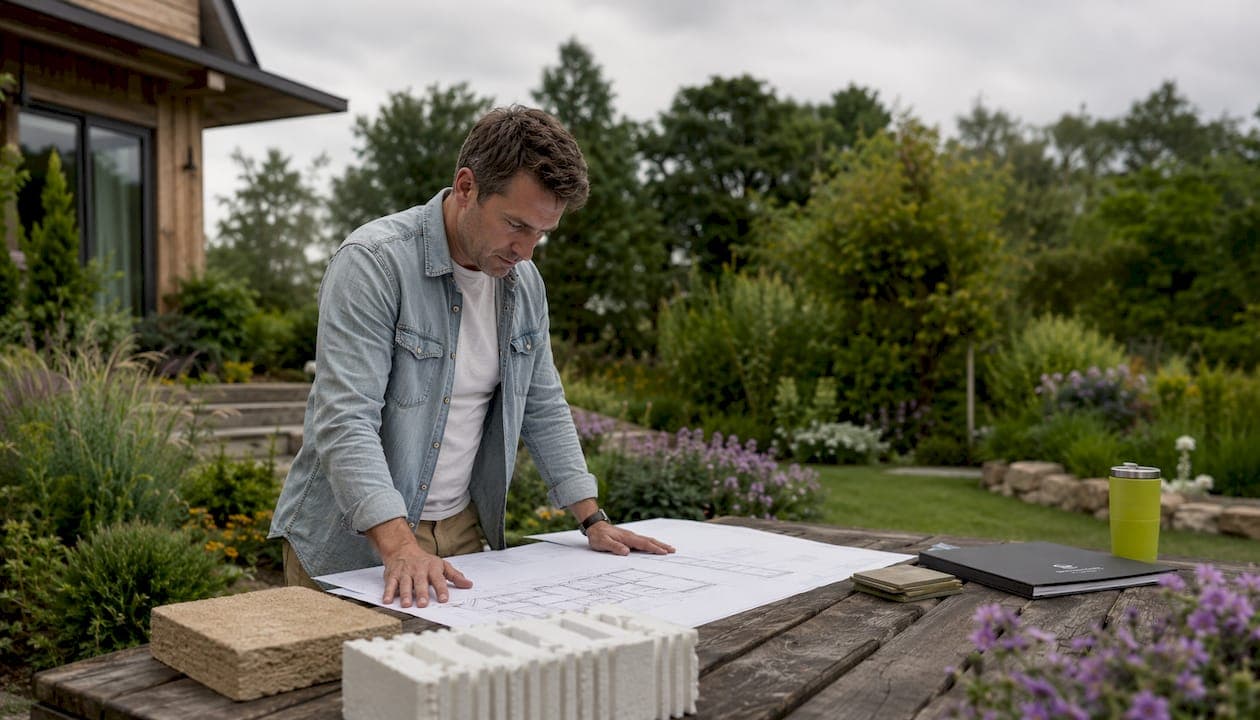
- Insulated Concrete Forms (ICF): Interlocking foam blocks filled with concrete create an exceptionally airtight, thermally efficient wall. ICF performs well in Alberta’s freeze-thaw cycles and dramatically reduces heating loads.
- Hempcrete: A mixture of hemp hurd and lime binder, hempcrete acts as a breathable, non-toxic insulation infill with strong thermal resistance and carbon sequestration properties. Hempcrete Homes in Calgary supplies prefabricated hemp panels and blocks suited to Alberta’s climate.
- Recycled steel: Steel produced in electric arc furnaces uses a high proportion of scrap metal, cutting embodied carbon compared to virgin steel. It remains one of the most structurally reliable options for home additions and commercial builds.
- Mass timber (cross-laminated timber / glue-laminated timber): Engineered wood products carry lower embodied carbon than concrete or steel and are renewable. Canada’s federal government has invested directly in mass timber prefabrication to accelerate its adoption.
- Low-carbon cement: Carbon Upcycling Technologies in Calgary produces cement materials from industrial byproducts and captured CO2, partnering with four of the world’s largest cement manufacturers.
- Rammed earth: Compressed natural soil walls offer excellent thermal mass and durability. Locally, Innovative Earth Inc. builds rammed earth homes and passive houses in Alberta at approximately $250 per square foot.
- Polysand composite: Mother Earth Inc. combines recycled plastics and sand into durable landscaping slabs and pavers, with products starting at $13.00 each, suited to Canadian outdoor conditions.
- Bio-fibre reinforced cement panels: Tekle Technical Services Inc. develops panels incorporating agricultural and forestry byproducts, advancing sustainable construction materials through Alberta-based research.
- Recycled content insulation: Mineral wool and recycled cellulose insulation both outperform standard fibreglass batts in airtightness and fire resistance, with lower embodied carbon profiles.
- Reclaimed wood and salvaged materials: Reusing structural lumber, flooring, and brick eliminates extraction emissions entirely and adds character to residential renovations.
| Material | Embodied carbon | Thermal performance | Local Alberta source | Relative cost |
|---|---|---|---|---|
| ICF | Moderate (EPS foam) | Excellent | Widely available | Moderate upfront |
| Hempcrete | Very low (sequesters carbon) | High | Hempcrete Homes, Calgary | Moderate |
| Recycled steel | Low | N/A (structural) | National suppliers | Competitive |
| Mass timber (CLT/GLT) | Low | Good | Canadian mills | Moderate |
| Low-carbon cement | Very low | N/A (structural) | Carbon Upcycling Technologies | Competitive |
| Rammed earth | Very low | Excellent (thermal mass) | Innovative Earth Inc. | Competitive pricing |
| Polysand composite | Low (recycled content) | N/A (landscaping) | Mother Earth Inc. | Low |
| Bio-fibre panels | Low | Good | Tekle Technical Services | Emerging |
Lessons learned from Alberta’s sustainable building community
Alberta’s sustainable building sector has produced clear, hard-won lessons that go beyond material selection alone.
- Design decisions come first. Building massing and orientation have the greatest influence on material performance. Passive solar design reduces heating demand before a single wall assembly is chosen, making every material work harder.
- ICF involves trade-offs. The expanded polystyrene (EPS) foam in ICF systems is durable and energy-efficient, but the petroleum-derived foam can off-gas styrene. Homeowners prioritising indoor air quality should weigh this against hempcrete or mineral wool alternatives.
- Hempcrete faces code hurdles. As a non-structural material, hempcrete often requires code exemptions in Alberta unless engineered as structural panels. Factor permit timelines into your project schedule.
- Material transparency is now expected. Alberta builders are moving from energy-efficiency metrics alone toward embodied carbon disclosure and EPDs as part of standard project documentation.
- Certification integrates everything. Programmes like Built Green and ENERGY STAR reward projects that combine material choice, airtightness, and mechanical systems. Pursuing certification early shapes better decisions throughout the build.
Pro Tip: In Alberta’s cold climate, combine a well-oriented building form with high-mass materials like rammed earth or ICF on south-facing walls. The thermal mass absorbs solar gain during the day and releases it overnight, cutting heating loads without adding mechanical complexity.
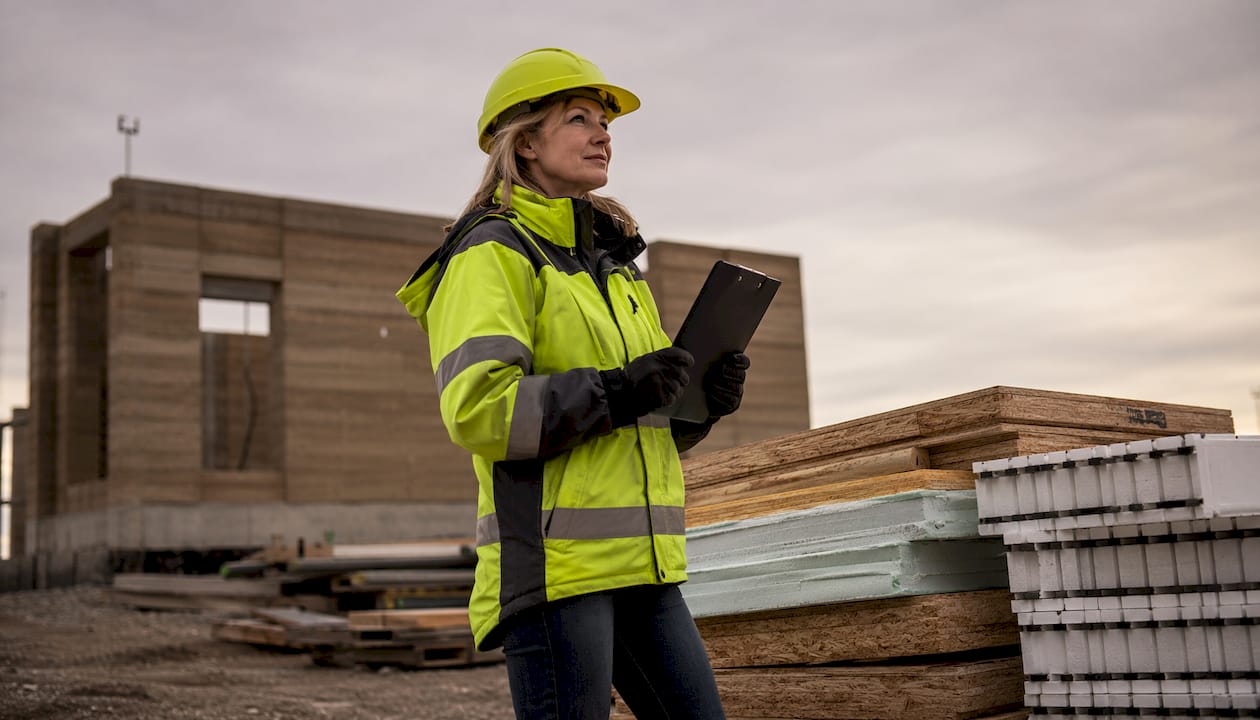
What are the seven pillars of sustainable construction?
Sustainable construction rests on seven interconnected principles. Understanding them helps you ask better questions of your builder and make material choices that hold up over time.
- Resource efficiency: Use materials with recycled content, low extraction impact, or local sourcing to reduce raw material consumption.
- Energy efficiency: Prioritise insulation, airtightness, and passive design to cut operational energy demand. ENERGY STAR and Net Zero Energy standards provide measurable benchmarks.
- Durability: Choose materials built to last. A rammed earth wall or recycled steel frame outlasts many conventional assemblies, reducing replacement cycles.
- Waste reduction: Design for material efficiency and specify prefabricated components to cut on-site waste. Mass timber prefabrication is a strong example.
- Water conservation: Select materials and systems that reduce water use during construction and operation, including low-water landscaping products like polysand pavers.
- Indoor environmental quality: Avoid materials that off-gas volatile organic compounds. Hempcrete, natural plasters, and low-VOC finishes protect occupant health.
- Innovation and maintenance: Specify materials with EPDs, support local R&D, and plan for long-term maintenance. Alberta’s Buy Clean policy direction rewards builders who document and reduce embodied carbon from the start.
Alberta’s cold climate adds specific demands: thermal bridging at wall connections, freeze-thaw resistance in exterior assemblies, and the need for vapour management in airtight envelopes. These factors make material selection more consequential here than in milder Canadian climates.
Alberta innovators leading the way in sustainable materials
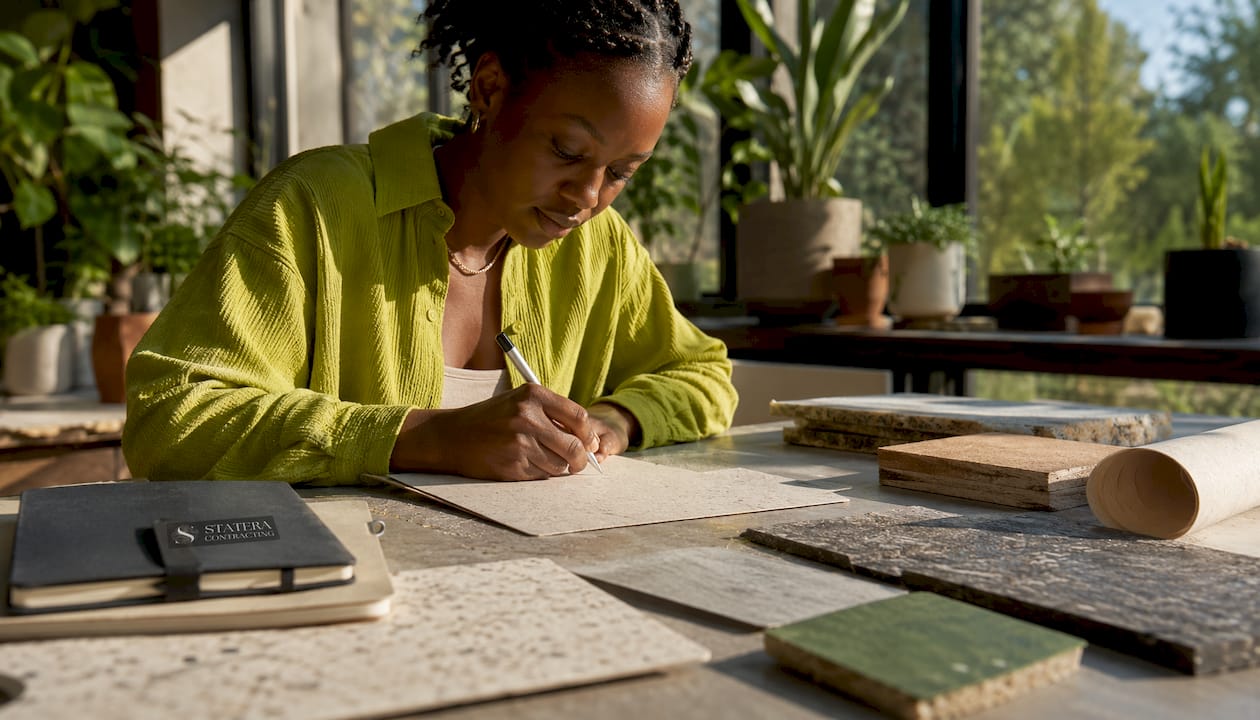
Several Alberta-based companies are producing or supplying genuinely differentiated sustainable construction materials, not just distributing national products.
| Company | Location | Speciality | Product/Service |
|---|---|---|---|
| Carbon Upcycling Technologies | Calgary | Low-carbon cement | Cement from CO2 and industrial byproducts |
| Mother Earth Inc. | Alberta | Polysand composites | Recycled plastic and sand pavers, slabs |
| Innovative Earth Inc. | Alberta | Rammed earth construction | Rammed earth homes, passive house builds |
| Tekle Technical Services Inc. | Alberta | Bio-fibre composites | Agricultural and forestry byproduct panels |
| Hempcrete Homes | Calgary | Hemp building products | Prefabricated hemp panels and blocks |
Local sourcing matters beyond provincial pride. Shorter supply chains reduce transportation emissions and make EPD documentation more straightforward. Products designed for Alberta conditions, whether rammed earth walls engineered for frost depth or hemp panels sized for local framing systems, also tend to perform more reliably than imported equivalents.
For certification support and performance verification, firms like 4 Elements Integrated Design provide third-party green building certification support across Built Green, ENERGY STAR, and Net Zero Energy programmes in Western Canada.
How do you assess the environmental impact of building materials?
Environmental impact assessment for construction materials looks at a product’s effects across four main categories: greenhouse gas emissions, resource depletion, water use, and toxicity. In Canadian practice, the primary tool is the Environmental Product Declaration, a standardised third-party document that quantifies a material’s global warming potential and other impacts using verified life cycle data.
For Alberta projects, the most practical starting point is requesting EPDs from your material suppliers. The federal government’s Standard on Embodied Carbon in Construction now requires EPDs for structural concrete and steel on major federal projects, and this requirement is shaping expectations across the broader market. When EPDs are not available, regional industry average data from the National Research Council’s Life Cycle Inventory Dataset Repository provides a workable baseline.
Beyond carbon, consider indoor air quality impacts. Materials like EPS foam, certain adhesives, and standard vinyl flooring release compounds that affect occupant health over time. Specifying low-VOC, third-party tested products addresses both environmental and health dimensions simultaneously.
Why life cycle analysis changes how you choose materials
Life cycle analysis (LCA) evaluates a material’s environmental impact from raw material extraction through manufacturing, transport, use, and end-of-life disposal or reuse. The key insight for Alberta builders is that a material’s operational performance is only part of the picture. A highly insulating product with very high embodied carbon may not deliver a net environmental benefit for decades, if ever.
Whole-building LCA is now required for major federal construction projects under Canada’s updated embodied carbon standard, and the methodology is filtering into provincial and municipal procurement. For residential projects, even a simplified LCA comparison between two insulation options or two structural systems can reveal surprising results. Recycled cellulose insulation, for example, typically carries a fraction of the embodied carbon of spray polyurethane foam, while delivering comparable thermal resistance.
The practical takeaway: ask your contractor or designer to compare at least two material options on both embodied carbon and operational performance before finalising specifications.
Do sustainable materials cost more than conventional ones?
The cost gap between sustainable and conventional materials is narrower than most homeowners expect, and in some cases it has closed entirely. A Clean Energy Canada analysis of Canadian building case studies found that lower-carbon material alternatives are available at the same cost or for a negligible premium across almost all material categories. Where premiums do exist, they typically represent a rounding error within a multi-million-dollar project budget.
Design efficiency amplifies the savings. The same analysis found that combining lower-carbon materials with design changes, such as reducing below-grade construction or simplifying building form, can reduce embodied carbon by up to 41% while cutting material costs. For Alberta homeowners considering home additions or basement finishing, this means that specifying recycled steel rebar, lower-carbon concrete, or mineral wool insulation rarely adds meaningful cost when the project is designed efficiently from the start.
Rammed earth and passive house construction in Alberta runs at a cost comparable to well-built conventional construction when long-term energy savings are factored in. The upfront cost of ICF is higher than standard wood framing, but reduced heating and cooling loads typically recover that premium within the building’s lifespan.
Key takeaways
Lower-carbon materials are available in Alberta at competitive prices, and the regulatory pressure to document and reduce embodied carbon is accelerating across both federal and provincial projects.
| Point | Details |
|---|---|
| EPDs are the new standard | Environmental Product Declarations are now required for structural materials on major federal projects and are becoming expected across the market. |
| Local sourcing reduces emissions | Alberta companies like Carbon Upcycling Technologies, Innovative Earth Inc., and Mother Earth Inc. supply verified low-carbon products with shorter supply chains. |
| Design decisions amplify material benefits | Building orientation and massing determine how well any material performs; passive solar design reduces heating demand before wall assemblies are chosen. |
| Cost gap is largely closed | Lower-carbon alternatives are available at the same cost or negligible premium across most material categories, per Clean Energy Canada’s Canadian case studies. |
| Rammed earth pricing is competitive | Rammed earth and passive house construction in Alberta costs approximately $250 per square foot, comparable to well-built conventional builds. |
Ready to build or renovate with sustainable materials in Calgary?
Statera Contracting works with homeowners and commercial clients across Calgary on renovation projects that take material performance seriously, from kitchen and bathroom upgrades to full home additions and commercial build-outs. We can help you identify eco-friendly options that fit your budget, meet Alberta’s building codes, and qualify for green building certifications. Whether you’re exploring sustainable kitchen upgrades or planning a larger build, getting the material conversation right at the design stage saves money and avoids costly changes later. Reach out to Statera Contracting to discuss your project.
Recommended
- Budget kitchen renovations: your 2026 Alberta guide | Statera Contracting
- Bathroom remodel ideas: your 2026 Alberta guide | Statera Contracting
- Contemporary Kitchen Renovation: Your 2026 Alberta Guide | Statera Contracting
- Home Renovations Calgary 2026 Owner’s Roadmap | Statera | Statera Contracting