Attic insulation with proper air sealing, basement insulation, and a right sized high-efficiency heating system or heat pump deliver the fastest payback on energy efficient renovations in Alberta. Before spending on any of them, book an EnerGuide home evaluation. It maps your home’s actual heat loss and, in some cases, is required to qualify for CEIP financing or federal support. Municipal and federal programs can shorten your payback timeline considerably.
TL;DR:
- Insulating attics and sealing air leaks typically provide the fastest payback, often within three to six years, especially if combined with an EnerGuide evaluation.
- Upgrading basements and foundation insulation can significantly reduce heat loss in older homes, with costs varying based on scope and whether the space is finished.
- Proper sequencing of envelope improvements before mechanical upgrades prevents unnecessary expenses and improves overall energy efficiency.
- Incentives like CEIP financing often attach to the property and require municipal verification, documentation, and working with qualified contractors.
- Regular maintenance, including filter changes and inspecting insulation, is essential to sustain energy savings after upgrades.
Table of Contents
- Top energy-efficient renovations for Alberta homes (ranked and explained)
- How should you prioritize energy upgrades for your home?
- Incentives and financing that help Albertans pay for energy renovations
- Preparing for an EnerGuide home evaluation
- How Statera Contracting helps Alberta homeowners deliver envelope-first energy renovations
- Maintenance tips to sustain your energy efficiency gains
- Common pitfalls in Alberta energy renovations
- Why the payback math on energy renovations gets oversimplified
- Ready to scope your energy retrofit? Here’s the next step
- Sources
Top energy-efficient renovations for Alberta homes (ranked and explained)
Alberta’s winters punish a leaky building envelope harder than almost anywhere else in Canada, which is exactly why the payoff on envelope work is bigger here than in milder climates. Get the envelope right before you touch the furnace.
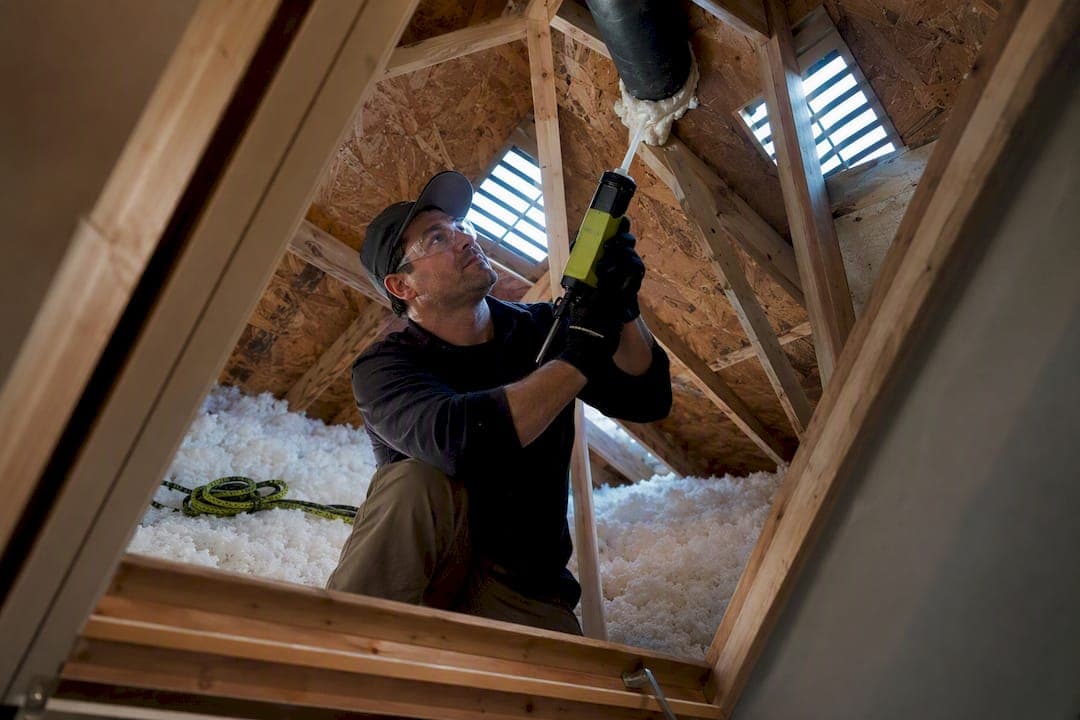
- Attic insulation and air sealing. Heat rises, and an under insulated attic is usually the single biggest source of winter heat loss in an older Calgary or Edmonton area home. Sealing bypasses around pot lights, plumbing stacks, and the attic hatch before adding insulation typically costs somewhere in the $2,000 to $5,000 range for a standard bungalow or two-storey attic, with payback often inside three to six years depending on your current R-value.
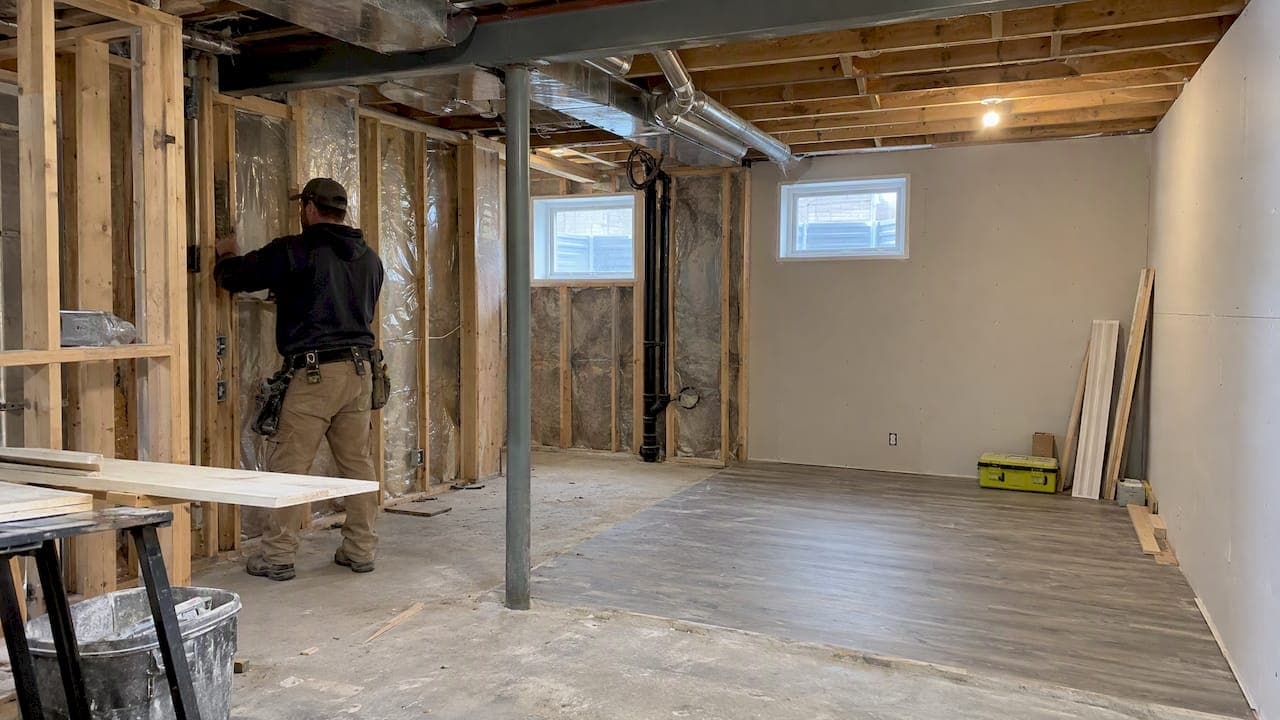
- Basement and foundation insulation. Uninsulated basement walls can account for a large share of a home’s total heat loss in older construction. Options range from rigid foam applied to interior walls to spray foam in a full basement renovation, and costs vary widely based on whether the space is finished or being opened up anyway.
- Wall insulation for older homes. Blown-in cellulose or fibreglass through small drilled holes works well on homes with hollow wall cavities, while exterior rigid insulation (sometimes paired with new siding) suits homes already due for an exterior refresh. The trade-off is straightforward: blown-in is cheaper and less disruptive, exterior insulation is more expensive but solves thermal bridging at the studs.
- Windows and exterior doors. Repair drafty existing windows with new weatherstripping and caulking before assuming full replacement is necessary. When replacement is warranted, triple-pane glazing holds up noticeably better against Alberta’s temperature swings than double-pane, though the higher upfront cost means payback leans more on comfort and resale than pure energy savings.
- Heating system upgrades. A high-efficiency condensing furnace still makes sense for many Alberta homes, but cold-climate heat pumps have improved enough to handle much of the province’s winter heating load, often paired with a furnace as backup. Correct sizing matters more here than brand: an oversized furnace cycles inefficiently, and an undersized heat pump struggles on the coldest days.
- Smart thermostats, zoning, and LED lighting. These are the cheapest items on this list and the fastest to install, and they complement the bigger jobs by squeezing extra savings out of a system that’s already running efficiently.
Pro Tip: If you’re insulating the envelope anyway, wait to size your new furnace or heat pump until after the insulation work is done. A tighter, better insulated home often needs a smaller, less expensive heating system, and NRCan’s own guidance treats the house as one connected system rather than a list of separate parts.
How should you prioritize energy upgrades for your home?
Skipping straight to a shiny new furnace before sealing an attic is a common and expensive mistake. Work through your home in this order instead:
- Book an EnerGuide evaluation first. An energy advisor pinpoints exactly where your home is losing heat, so you’re spending money on the right problem instead of guessing.
- Match your budget to a tier. Under $5,000 usually means attic air sealing and insulation top-ups. $5,000 to $20,000 opens up basement insulation or a furnace replacement. Above $20,000 puts a heat pump, full wall retrofit, or window replacement in reach.
- Check ventilation and combustion safety before you seal anything. Tightening a home without confirming adequate ventilation or safe furnace and water heater venting can create moisture or carbon monoxide risks.
- Weigh comfort and resale, not just payback math. New windows or a heat pump might not pay for themselves fastest on paper, but they can matter more to a buyer, or to how your home actually feels in January, than the spreadsheet suggests.
Incentives and financing that help Albertans pay for energy renovations
The Clean Energy Improvement Program, or CEIP, is the financing tool most specific to Alberta, and it works differently than a typical rebate. Individual municipalities opt into CEIP, so availability depends entirely on where you live.
That structure has a real consequence worth understanding before you sign up: CEIP financing typically stays attached to the property if you sell, meaning the new owner may assume the remaining payments, or you settle the balance at closing. It’s a smart way to spread cost, but it’s also a negotiating point buyers and sellers need to address directly.
Combined pre and post-retrofit EnerGuide evaluations, which many programs require for eligibility, typically run $600 to $1,000 depending on home size and complexity.
On the federal side, the Canada Greener Homes Initiative has changed shape over time, and some streams, including targeted heat pump affordability support, have closed in certain periods. Don’t plan your budget around a program window without confirming it’s still open on NRCan’s site first. CMHC’s eco-related mortgage products are worth a look too, since they can affect financing terms tied to energy improvements.
Before applying for any incentive, get organized:
- Confirm your municipality actually offers CEIP before assuming it’s an option.
- Keep every invoice and receipt tied to the eligible upgrade.
- Have your property tax roll number on hand for CEIP applications.
- Work with a CEIP-qualified contractor where the program requires one.
Preparing for an EnerGuide home evaluation
An energy advisor arrives with a blower door to measure how much air your home leaks, then checks insulation levels in the attic and walls, inspects windows and doors, and reviews your heating and water heating systems along with ventilation. Combined pre and post-retrofit evaluations generally cost $600 to $1,000, and the range depends on your home’s size and how much extra time the advisor needs.
Before the visit:
- Clear attic access so the advisor can actually get in to measure insulation.
- Make sure your furnace and water heater are operational, since the advisor needs to inspect them running.
- Fix any obvious envelope damage beforehand; a hole in a wall or missing weatherstripping will just show up as a flagged deficiency.
You’ll walk away with an EnerGuide rating, a Renovation Upgrade Report listing recommended retrofits, and documentation you’ll need for several rebate and financing applications.
How Statera Contracting helps Alberta homeowners deliver envelope-first energy renovations
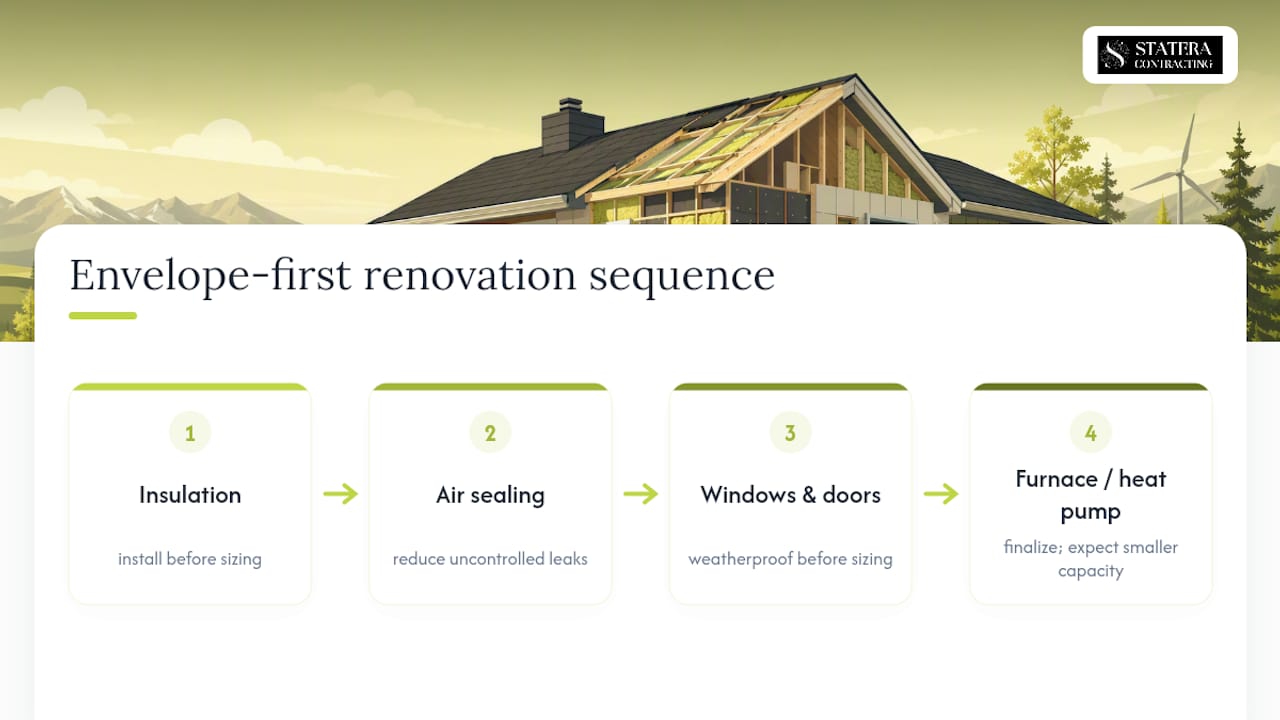
Statera Contracting approaches energy retrofits the same way NRCan recommends: envelope first, mechanical systems second. That means sequencing insulation, air sealing, and window or door weatherproofing before finalizing furnace or heat pump sizing, which keeps you from paying for mechanical capacity you don’t actually need once the envelope is tightened.
On the paperwork side, Statera Contracting coordinates scheduling around your EnerGuide advisor’s visits and keeps the documentation, invoices, permits, and upgrade records organized so applying for CEIP or federal support doesn’t turn into a scramble. For homeowners juggling a renovation and a rebate application at the same time, that coordination is often the difference between a smooth process and a frustrating one.
Maintenance tips to sustain your energy efficiency gains
A new furnace or fresh attic insulation won’t keep performing at its best without a bit of upkeep. Change furnace filters every one to three months. A clogged filter forces the system to work harder and erodes the efficiency gains you just paid for.
Check attic insulation every couple of years, especially after any roof work, pest activity, or major renovation that involved crawling around up there. Insulation gets compressed or displaced more easily than most homeowners expect. Reseal caulking around windows and doors as it dries out and cracks, typically every three to five years depending on sun exposure and temperature swings.
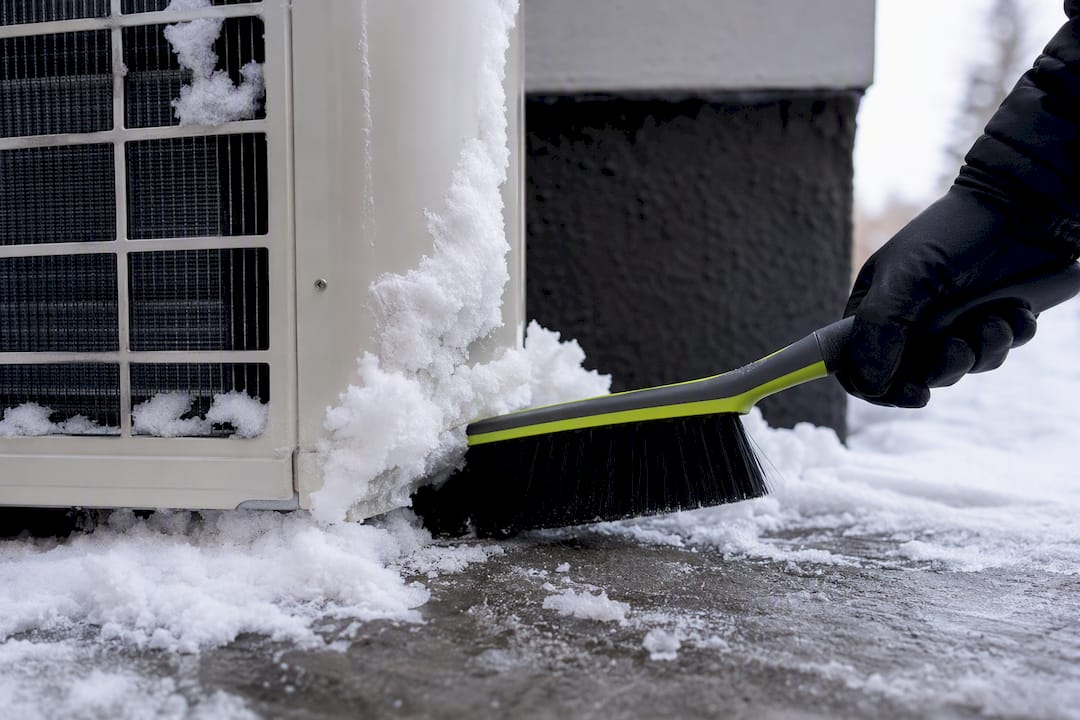
If you added a heat pump, keep the outdoor unit clear of snow and ice buildup through the winter. A buried or iced-over unit loses efficiency fast and can trip into backup heat mode more often than it should. For homes with new ventilation systems installed alongside tighter air sealing, clean or replace HRV filters on the schedule the manufacturer recommends. A tightened building envelope depends on that ventilation working properly, since it’s now doing more of the job of managing indoor air quality.
Finally, watch your utility bills against a baseline. A sudden jump after a renovation, rather than a steady decline, is often the first sign something isn’t performing the way your Renovation Upgrade Report predicted, and it’s worth investigating before a small issue becomes an expensive one.
Common pitfalls in Alberta energy renovations
The single most common mistake is sequencing: replacing a furnace or windows before addressing insulation and air sealing wastes part of that investment, since the new equipment ends up compensating for envelope losses it was never meant to fix. NRCan is explicit that a home performs as one connected system, not a collection of separate upgrades.
Alberta’s building code and climate add a few local wrinkles. Vapour barrier placement matters more here than in milder provinces, since a poorly sealed or misplaced vapour barrier in a cold climate can trap moisture inside wall or attic cavities, leading to mould or structural rot over a few winters. Tightening a home’s envelope without upgrading or checking ventilation creates a similar risk, since older homes often relied on natural air leakage for fresh air exchange that a sealed envelope no longer provides.
Oversizing heating equipment is another frequent misstep. A furnace or heat pump sized for a home’s condition before insulation upgrades will be too large once the envelope is tightened, which hurts efficiency and comfort through short cycling. Homeowners also sometimes assume CEIP is available everywhere in the province. It isn’t. Participation depends entirely on your municipality opting into the program, so confirming local availability before budgeting around it saves a lot of frustration later.
Finally, permit requirements catch people off guard. Structural insulation work, furnace replacements, and some electrical upgrades tied to heat pumps typically require permits in Alberta municipalities, and skipping that step can complicate both resale and rebate documentation down the line.
Why the payback math on energy renovations gets oversimplified
Most guidance on energy efficient renovations treats payback as a simple division problem: upfront cost divided by annual savings equals years to break even. That math ignores how Alberta’s climate changes the equation. Because heating loads here run higher than in milder provinces, the dollar value of insulation and air sealing is disproportionately larger than the same upgrade would deliver in Vancouver or Toronto, and generic national guides rarely account for that.
The bigger gap in conventional advice is sequencing discipline. Plenty of homeowners want to jump straight to a heat pump because it feels like the modern choice, when an under insulated attic is quietly costing them more every winter than any mechanical upgrade will recover. The research on treating a home as one system isn’t a minor technical footnote. It’s the difference between a renovation that pays for itself and one that just moves the same heat loss problem around.
If there’s one thing worth prioritizing above all else, it’s the EnerGuide evaluation itself. It costs a few hundred dollars and tells you, with actual measurements rather than assumptions, where your money will do the most good.
— Patrick
Ready to scope your energy retrofit? Here’s the next step
Reading about attic insulation and heat pump sizing only gets you so far. At some point, someone needs to walk your attic, check your basement walls, and tell you what your specific home actually needs. That’s the scope visit offered to Calgary and area homeowners, and it’s the practical bridge between an EnerGuide report full of recommendations and a renovation plan with real numbers attached.
If your basement is part of the plan, whether that’s adding insulation, addressing a legal suite conversion, or a full finishing job, our basement and living spaces renovation service covers the structural and insulation work together, so you’re not paying twice to open the same walls. Kitchens and bathrooms often get folded into a larger energy upgrade too, particularly when plumbing or electrical work overlaps with insulation access. Our kitchen renovation and bathroom renovation services in Calgary can be scoped alongside envelope work if you’re already opening up those areas.
We also help homeowners keep their invoices, permits, and project documentation organized in a way that makes applying for CEIP or federal support less of a headache. Consider booking a scope visit and ask directly about CEIP-qualified contractor status for your project.
Sources
- Renovating for energy efficiency - Natural Resources Canada
- Clean Energy Improvement Program (CEIP) - Alberta Municipalities
- EnerGuide energy efficiency home evaluations - Natural Resources Canada